When You're the Only One in a Hijab at the Reception: Surviving (and Thriving at) Non-Muslim Weddings
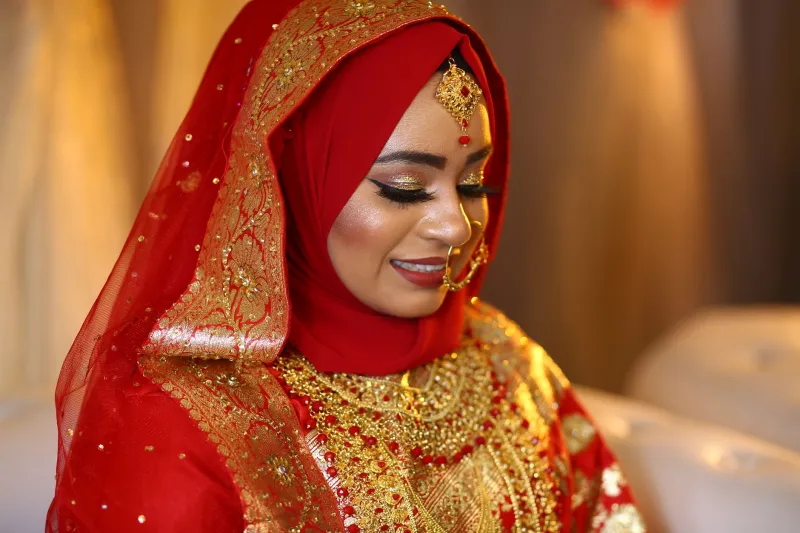
Let's be honest for a second. You got the invitation. You were genuinely excited — your college roommate is getting married, or your coworker finally said yes, or your cousin's fiancé is throwing the wedding of the century in a vineyard outside Napa. You RSVP'd yes. And then you opened the dress code card.
Cocktail attire.
Cue the internal spiral.
For Muslim women who observe modest dress — whether that means a hijab, a preference for covered arms and legs, or simply a style that doesn't align with what mainstream bridal culture considers "appropriate" — attending non-Muslim weddings can feel like navigating a maze with no map. You want to celebrate the people you love. You also want to feel like yourself while you're doing it. And somewhere between the open bar and the DJ playing Beyoncé, you're quietly doing the work of holding both of those things at once.
You're not alone in this. Not even close.
The Dress Code Dilemma Is Real — And It's Exhausting
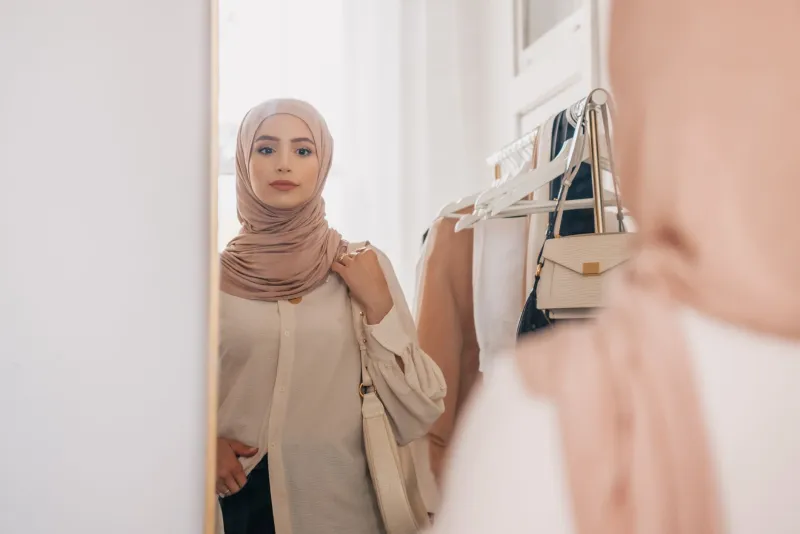
Sarah, a 29-year-old marketing manager from Chicago, remembers attending her best friend's beach wedding in Florida two summers ago. The invite said "tropical chic." The venue was an outdoor ceremony in 90-degree heat. And Sarah, who wears hijab, spent two weeks hunting for something that felt festive, modest, and wouldn't leave her overheated before the vows were even done.
"I found this gorgeous linen wide-leg set in a coral color," she says. "I felt amazing in it. But I still spent the whole morning wondering if people would think I was underdressed, or worse — that I was making some kind of statement."
That tension — between dressing for yourself and managing how others might read your choices — is something a lot of Muslim women at secular events know intimately. The good news? The fashion landscape has genuinely shifted. Modest style has had its moment (and then some), and finding formal, fashion-forward options that work for covered women is easier than it was even five years ago. Brands like Aab, Modanisa, and even mainstream retailers like ASOS and Nordstrom now carry options that hit the sweet spot between elegant and modest.
The real trick isn't finding the outfit. It's giving yourself permission to stop apologizing for it.
The Visibility Paradox: Seen and Unseen at the Same Time
There's something uniquely disorienting about walking into a room where your presence is both highly visible and somehow completely overlooked. Muslim women at non-Muslim weddings often describe a specific kind of social vertigo — you're noticeable in a way that feels charged, and yet the conversations happening around you assume a shared cultural context that doesn't quite include you.
Nadia, 33, from the DC area, laughs when she describes attending three weddings in one summer — all non-Muslim, all very different vibes. "At one of them, a woman I'd never met grabbed my arm during cocktail hour and said, 'Oh, I love your wrap style, is that a trend?' She thought my hijab was a fashion scarf. I didn't know whether to laugh or explain or just say thank you."
She said thank you.
That kind of moment — where your identity becomes a curiosity rather than just a given — can feel othering even when the person means well. And it stacks up over the course of a long reception. By the time you're sitting through the fourth toast, you've already done a full day's worth of quiet identity navigation that nobody else at your table had to do.
Recognizing that this labor is real is the first step. The second step is deciding, in advance, how much energy you want to spend on it.
Setting Yourself Up for a Good Time (Not Just a Fine Time)
Here's what women who've done this a few times have figured out: preparation is everything, and it starts well before the day of.
Talk to the couple ahead of time if you're close enough. Not to ask permission — you don't need it — but to get practical details. Will there be a prayer room or quiet space? Is the venue indoors or out? What does the timeline look like? This isn't about accommodating your faith as an afterthought; it's just smart logistics, the same way any guest might ask about parking or dietary options.
Find your person at the event. Whether it's another guest you already know, the bride herself, or even a friendly bartender who makes good mocktails — having one solid anchor point can make a big venue feel a lot less isolating.
Decide in advance what you will and won't engage with. If someone asks about your hijab, you get to choose how much to share. "It's part of my faith" is a complete sentence. So is "I just love this style" if you're not in the mood for a deeper conversation. You don't owe anyone your theological autobiography between the salad course and the entrée.
Give yourself grace about the dancing situation. This one comes up a lot. Some Muslim women are totally comfortable on the dance floor. Others aren't. Some enjoy watching and cheering from the sidelines. There's no wrong answer, and a good friend won't pressure you either way.
Reframing What It Means to "Fit In"
Here's the thing that takes a while to really internalize: fitting in and belonging are not the same thing. Fitting in asks you to shrink, adjust, and sand down your edges until you match the room. Belonging means the room makes space for who you actually are.
You belong at your friend's wedding. Full stop. You were invited because someone loves you and wanted you there. Your faith, your style, your identity — those aren't obstacles to your presence. They're part of what you bring to the table.
Fatima, 27, from Houston, puts it simply: "I used to walk into these events already apologizing in my head. Like, sorry for being different, sorry for being visible, sorry for maybe making this complicated. And then at my coworker's wedding last year, something shifted. I walked in wearing this burgundy maxi dress and matching wrap and I just thought — I look incredible. And I'm here to celebrate someone I care about. That's it. That's the whole story."
That's the energy.
The Bigger Picture
Non-Muslim weddings, proms, galas, holiday parties — these spaces aren't always designed with Muslim women in mind. That's a fact. But Muslim women have always shown up to spaces that weren't designed for them and made those spaces richer for it. The coworker who brings the most thoughtful gift. The friend who gives the most heartfelt toast. The guest who dances (or doesn't) with the most genuine joy.
Navigating the awkward aisle doesn't have to mean enduring it. With the right outfit, the right mindset, and the right amount of self-compassion, you can walk into any reception hall as exactly who you are — and leave having had a genuinely good time.
Your presence is not a complication. It's a gift. Dress accordingly.