Wrap It Your Way: Muslim Women Are Turning the Hijab Into a Full-On Art Form
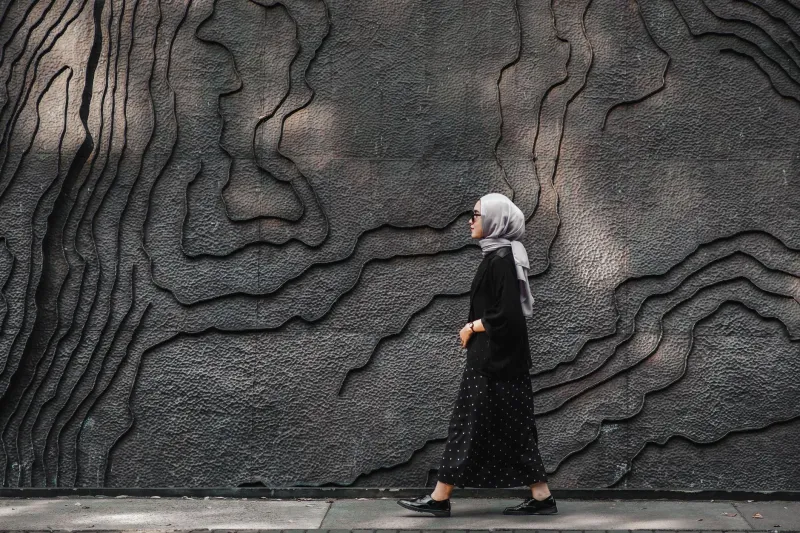
There's a persistent myth that choosing to cover means choosing to disappear. That modesty is synonymous with muted, that the hijab is a uniform rather than a choice — and certainly not a creative one. Muslim women across the country are done letting that narrative breathe.
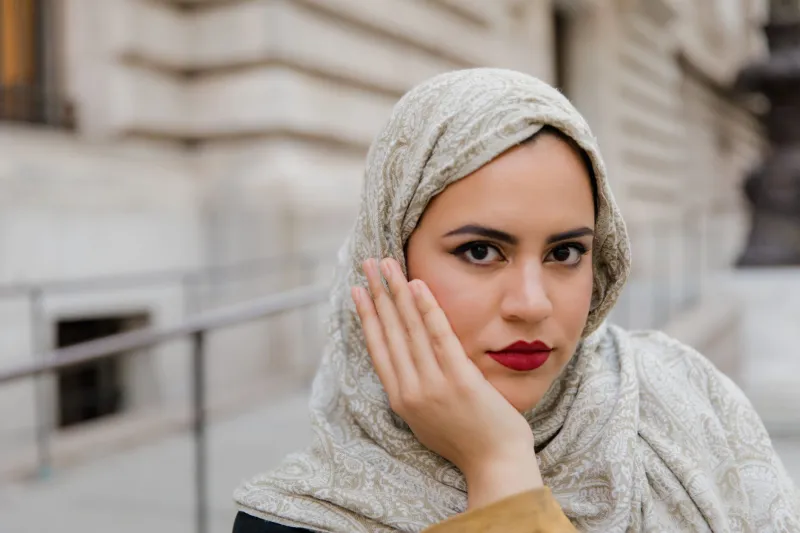
From the streets of Chicago to the college campuses of Southern California, a new generation of hijab wearers is pushing back — not by removing the scarf, but by completely reinventing what it can look like. Color blocking. Silk draping. Architectural folds. Minimalist neutrals paired with maximalist accessories. The hijab, for many women, has become the most expressive part of the entire outfit.
And honestly? It makes complete sense.
It Was Always Personal — Now It's Also Public
For a lot of Muslim women, the relationship with hijab styling has always been experimental — it just happened quietly, at home, in the mirror, before school or work. What's shifted is that those experiments are now being shared. Instagram, TikTok, Pinterest boards, and YouTube tutorials have created an entire ecosystem where hijab fashion isn't just visible — it's influential.
Creators like Dina Tokio, Nura Afia, and dozens of US-based stylists have helped build an audience that proves there's enormous appetite for this content. But beyond the influencers, everyday women are doing it too — posting their own looks, tagging their outfits, building small communities around a shared aesthetic sensibility that says: we are here, we are creative, and we are not dressing for your comfort.
"I used to think experimenting with my hijab meant I wasn't taking it seriously," says Mariam, a 27-year-old graphic designer in Atlanta. "Now I think the opposite. I take it seriously enough to make it mine."
The Texture Revolution
One of the biggest shifts happening right now is in fabric. The classic black jersey wrap — functional, easy, everywhere — hasn't disappeared, but it's sharing closet space with a much wider range of textures. Chiffon layered over a cotton under-cap. Satin with a soft sheen for evening events. Ribbed knit wraps styled casually for weekend errands. Linen for summer heat that still looks intentional.
Texture mixing has become its own skill set. Women are pairing matte fabrics with glossy accessories, or using a printed underlayer to peek out from beneath a solid outer wrap. It's the kind of detail that fashion people notice — and that's exactly the point. The hijab isn't an afterthought. It's part of the look.
For Nadia, a 31-year-old teacher in Houston, the shift toward texture came after years of feeling like her style stopped at the neck. "I started treating my hijab the same way I treat the rest of my outfit — like it has to work with everything, not just sit on top of it. Once I did that, getting dressed became actually fun."
Color as Language
Color blocking — pairing bold, contrasting solid colors in a single look — has found a natural home in hijab styling. A cobalt wrap against a burnt orange top. A deep plum scarf with a sage green coat. Terracotta paired with cream and gold accessories. Women are using color not just to look good, but to communicate something about who they are on any given day.
Minimalism is equally present. The "quiet luxury" aesthetic that's been dominating fashion spaces has a devoted following among Muslim women who were, in many ways, ahead of that curve. Neutral tones, clean lines, understated fabrics — it turns out that modest fashion and understated elegance have a lot of overlap, and women are leaning into it without apology.
What's notable is that neither approach — maximalist color play or pared-back minimalism — is being positioned as more "Islamic" than the other. That's a meaningful shift. The conversation is moving away from what's permissible and toward what's personal.
Challenging the "Safe" Stereotype
Modest fashion has long been stereotyped as boring by mainstream fashion media. The hijab, specifically, has often been treated as a limitation rather than a design element. That framing has started to crack — in part because Muslim women have made it impossible to ignore, and in part because the fashion industry (slowly, imperfectly) is beginning to catch up.
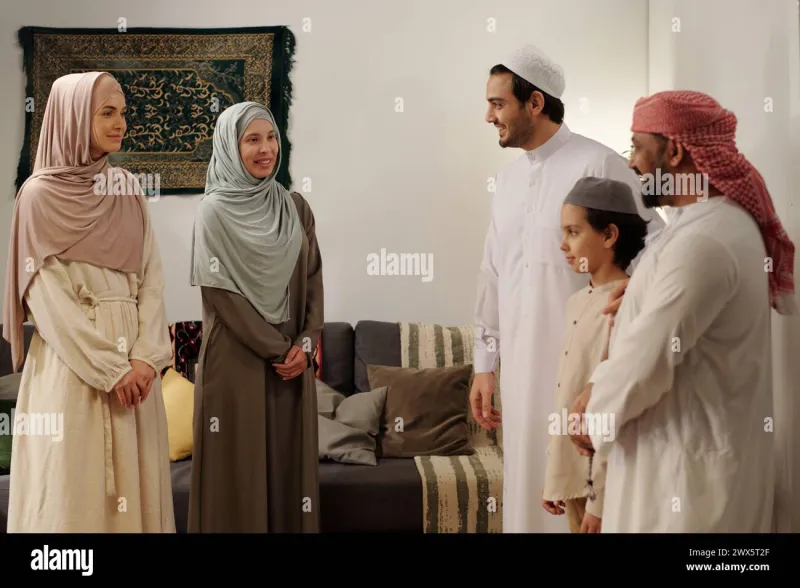
But Muslim women aren't waiting for mainstream validation. They're creating their own runways — online, at events, in everyday spaces. The real fashion show is happening in a university hallway when someone's hijab-and-blazer combo stops people in their tracks. Or at a family gathering where cousins are comparing how they've each styled the same color family differently. Or in the DMs, where women share photos with each other and say, simply: you look incredible.
"I don't need Vogue to tell me my style is valid," says Fatima, a 24-year-old student in New York. "I've got 3,000 followers who already know it."
Identity Intact, Creativity Unleashed
The most important thing about this moment in hijab fashion is what it isn't. It isn't a compromise. It isn't women edging toward removing the hijab or making it smaller or less visible. It's women making it more theirs — more expressive, more intentional, more connected to who they actually are.
Faith and fashion aren't in conflict here. For many women, the creativity they pour into their hijab styling is itself a form of gratitude — a way of honoring a choice they made and continuing to make it with joy rather than obligation.
The hijab has always meant something. What's changing is that it's starting to mean more things at once — devotion and delight, identity and art, faith and full, unapologetic self-expression.
And if that makes the world rethink what modest fashion looks like, even better.