Swipe, Match, Maybe Nikah? The Complicated Truth About Halal Dating Apps
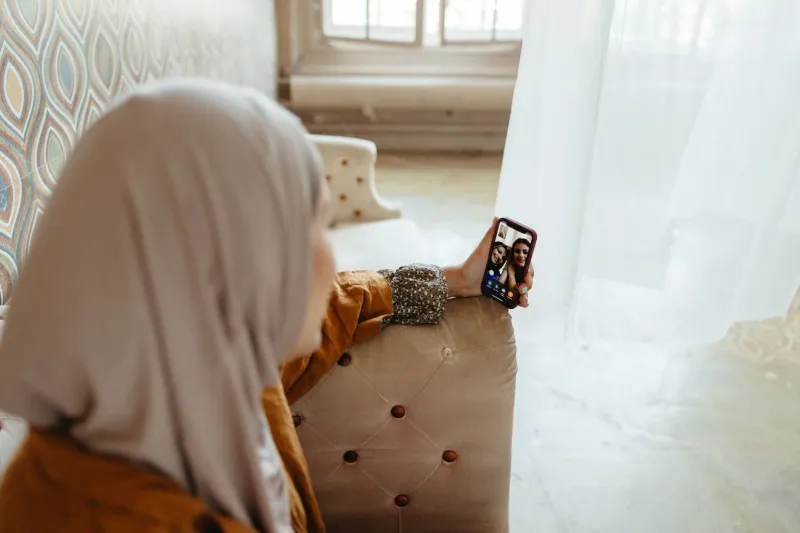
Let's be honest for a second. The idea of finding your person through an app still makes some of us a little uncomfortable — and if you grew up Muslim in America, that discomfort comes loaded with extra layers. There's the family expectation that things should happen organically (read: through some mythical community introduction that rarely materializes). There's the religious tension around the concept of "dating" at all. And then there's the very modern reality that, for millions of single Muslim women in their 20s and 30s, the mosque aunties just aren't coming through.
Enter the halal dating app. Platforms like Muzz, Salams, and Hawaya have positioned themselves as the faith-conscious alternative to Tinder and Hinge — spaces where your deen is a feature, not a footnote. But after years of these apps existing, the question isn't just whether they work. It's whether the promise of "intentionality" is actually being kept.
What Makes an App "Halal," Exactly?
The word gets thrown around a lot in marketing copy, but the definition is slippery. Most halal-branded apps distinguish themselves through a few key features: a chaperone or "wali" mode that allows a family member to observe conversations, the removal of explicit photo features, and a stated mission of facilitating marriage rather than casual connection.
Salams (formerly Minder) co-founder Haroon Mokhtarzada has described the platform as built around the idea that Muslim singles deserve a space that respects their values without requiring them to apologize for those values. That framing resonates — deeply — with a lot of users.
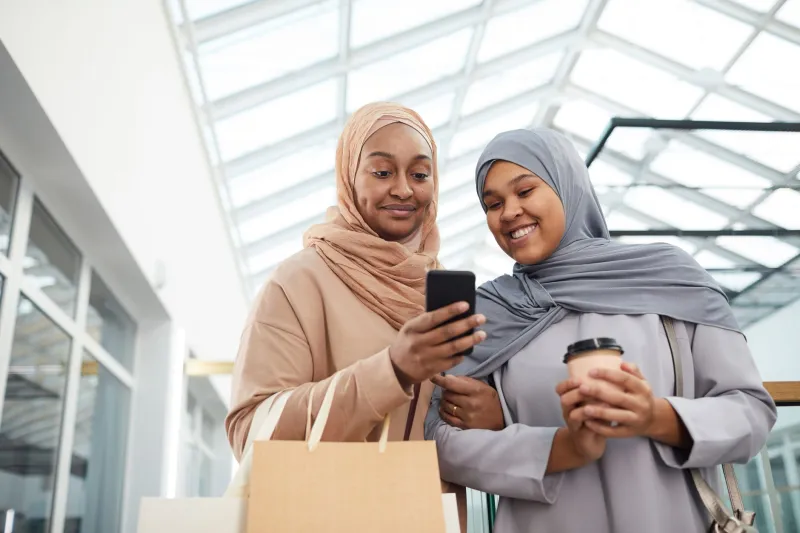
"I tried Hinge for about six months and I spent half my time explaining why I don't drink and why I'm not interested in anything casual," says Nadia, a 29-year-old marketing manager in Chicago. "Switching to Muzz felt like exhaling. Everyone on there already understands the baseline."
That shared baseline is genuinely valuable. Not having to justify your faith to every match is not a small thing.
But Here's Where It Gets Complicated
Shared religious identity doesn't automatically translate to shared values, compatibility, or — let's say it plainly — good behavior. Several women we spoke to described experiences on halal apps that felt anything but intentional.
Layla, 32, a teacher in the DC metro area, recounted matching with men who listed themselves as practicing Muslims but whose conversation style felt indistinguishable from what she'd experienced on mainstream apps. "There's this assumption that because someone downloaded a halal app, they're serious. But plenty of people are just... browsing. Same as anywhere else."
There's also the cultural complexity that these apps can't fully resolve through their design. Muslim communities in America are extraordinarily diverse — ethnically, theologically, in terms of practice level and family expectations. An app might connect a Somali-American woman in Minneapolis with a Pakistani-American man in Houston, but no algorithm can bridge the very real cultural negotiations that come next.
Dr. Yusra Ahmed, a licensed therapist who works extensively with Muslim clients navigating relationships, puts it this way: "The app gets you in the room. It doesn't do the relationship work for you. And I think sometimes people come to these platforms with the expectation that the faith filter will do more heavy lifting than it actually can."
The Safety Question Nobody Wants to Skip
One area where halal apps genuinely earn points is in their approach to safety — at least in theory. The wali mode, for instance, allows users to add a trusted contact who can see their conversations. For some women, this feature provides real peace of mind, particularly when navigating conversations with strangers.
But safety is more nuanced than a single feature. Fatima, 27, a grad student in Los Angeles, noted that while she appreciated the concept of a chaperone mode, she had no interest in her parents reading her messages. "I'm an adult. I want to be intentional about marriage, but I also want some privacy in how I get there." She ultimately left the wali feature unused — which is her right — but it raised a bigger question about who these apps are actually designed for.
There's also the issue of verification. Most halal apps don't require users to verify their identity, their marital status, or whether they're actually Muslim. That creates obvious vulnerabilities, particularly for women who may assume a faith-based platform means a vetted user base.
Mainstream Apps Aren't Going Anywhere Either
Here's the thing — plenty of Muslim women are finding meaningful connections on Hinge, Bumble, and even OkCupid, where faith-based filters have become increasingly sophisticated. OkCupid in particular allows users to filter by religion and answer detailed compatibility questions, which some users find more revealing than a platform where everyone is nominally Muslim but actual compatibility varies wildly.
"I found my husband on Hinge," says Amira, 34, a nurse in Houston. "He's Muslim, he's practicing, and we were compatible in ways that went way beyond religion. I don't think I would have found him on a halal app, honestly, because our paths to faith look really different and that might have screened us out."
This isn't an argument against halal apps — it's an argument for clarity about what you're actually looking for and which platform architecture serves that search.
So What Does "Intentional" Actually Mean?
The word intentional has become the defining buzzword of Muslim digital romance, and it's worth interrogating. Intention isn't a feature you can code. It's a quality you bring to the experience yourself.
Dr. Ahmed suggests that before downloading any app — halal or otherwise — Muslim women ask themselves some pointed questions: What am I actually ready for right now? What are my non-negotiables versus my preferences? How will I handle conversations that don't respect my boundaries, regardless of the platform?
"The women I work with who have the most success — however they define that — are the ones who get really clear on their own values before they start swiping," she says. "The app is just a tool. Your intentionality has to come from inside."
Nadia, who eventually met her now-fiancé on Muzz after about a year of use, agrees. "The app gave me access to people I wouldn't have met otherwise. But the intentionality? That was the work I did on myself first. Knowing what I wanted, being honest in my profile, being willing to have real conversations early."
The Bottom Line
Halal dating apps are neither the answer nor the problem. They're a tool — one that comes with genuine advantages (shared baseline, faith-affirming design) and genuine limitations (cultural complexity, inconsistent user intentions, safety gaps that haven't been fully closed).
If you're considering jumping into the digital matchmaking pool, here's what we'd actually recommend: be ruthlessly honest in your profile, ask clarifying questions early, trust your instincts when something feels off, and don't let the faith-branded packaging of a platform make you lower your guard.
Your standards don't need a halal stamp to be valid. And your search for a real, lasting connection — wherever it happens — is worth taking seriously.
The aunties may not be coming. But you've got this.