Stop Asking Me to Explain Islam: The Hidden Tax of Being the Muslim Woman at Work
It usually starts innocently enough.
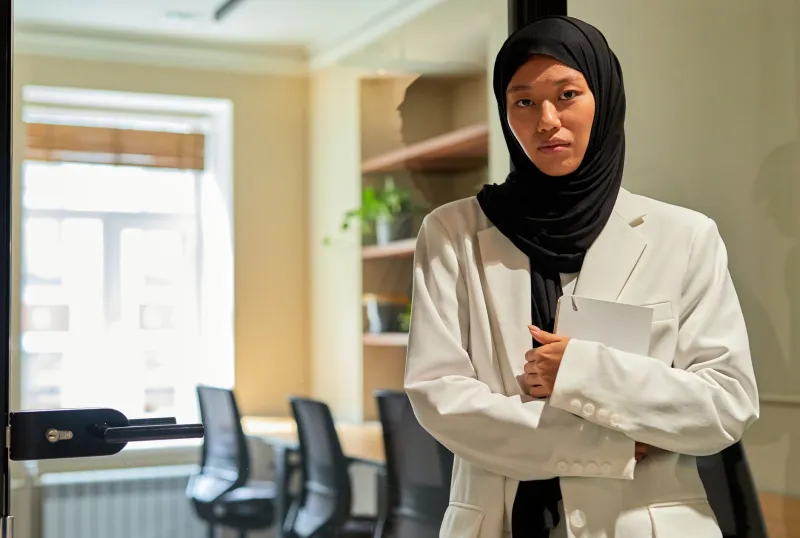
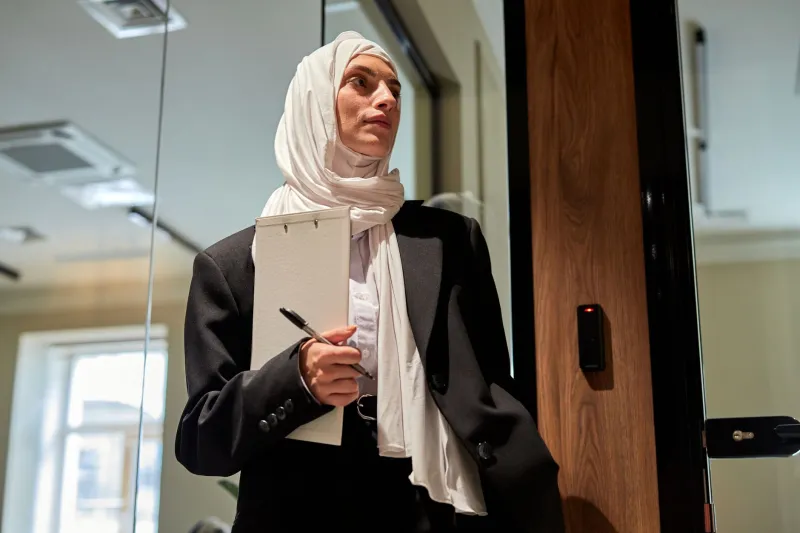
A news story breaks. A coworker swivels their chair toward you — the only visibly Muslim woman in the office — and says something like, "So what do Muslims actually think about this?" Or maybe it's subtler: a question about your lunch during Ramadan, a comment about your scarf, a well-meaning but deeply exhausting inquiry into whether you're "allowed" to attend the holiday party.
You answer. You're gracious. You smile. You explain.
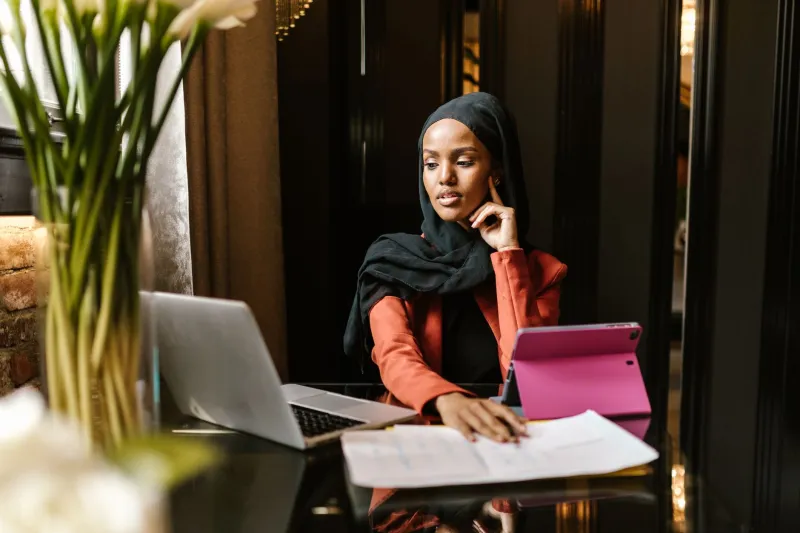
And then you go back to your desk, open your laptop, and wonder why you feel so tired when the workday has barely started.
This is the invisible tax. And Muslim women in American workplaces are paying it every single day.
What We're Actually Talking About
Let's name it clearly: the expectation that a Muslim woman will, on demand and without compensation, serve as educator, interpreter, cultural liaison, and PR representative for 1.8 billion people — while simultaneously meeting the same performance benchmarks as everyone else in the room.
It's exhausting in a way that's genuinely difficult to explain to someone who hasn't lived it, because no single moment feels like a big deal. A question here. A comment there. A moment where you're asked to weigh in on a geopolitical crisis because, well, you're Muslim. Individually, they're small. Collectively, they're a second job you never applied for.
"I've had colleagues ask me to review their diversity statements because they mentioned Islam," says Samira, a 32-year-old marketing manager in Atlanta. "I've been looped into meetings about 'Middle Eastern outreach' when my background is Pakistani-American and I'm literally a brand strategist, not a regional expert. It's like the hijab is a credential I didn't earn and can't opt out of."
This phenomenon has a name in academic circles — it's sometimes called the "minority tax" or "diversity tax" — and research consistently shows it falls disproportionately on women of color, including Muslim women, who often sit at the intersection of multiple marginalized identities.
The Microaggression Menu
The forms this takes are varied and, once you start cataloguing them, almost darkly creative.
There's the theological pop quiz: "Do you guys believe in Jesus?" "Why can't you eat pork?" "Is your husband okay with you working?" Questions that assume a deficit of basic knowledge and appoint you to fill it.
There's the news cycle summons: Any time Islam appears in a headline — a terror attack, a policy debate, a viral story — you become the designated responder. Your colleagues want reassurance, context, or absolution, and they've decided you're the one to provide it.
There's the performative inclusion: Being invited to weigh in on diversity initiatives not because of your actual expertise, but because your presence makes the effort look more legitimate.
And then there's the quiet, grinding work of managing other people's discomfort — softening your answers so nobody feels accused, smiling through questions that are actually pretty offensive, calibrating your responses so you're informative without being intimidating.
"I've literally caught myself apologizing for Islam," says Hana, a 28-year-old software engineer in Seattle. "Like, a tragedy happens and I feel this pressure to immediately distance myself from it, to reassure everyone around me. And at some point I thought — why am I doing this? I didn't do anything. I'm just trying to get through a standup meeting."
Why This Matters Beyond the Personal
This isn't just about individual discomfort. There are real professional consequences.
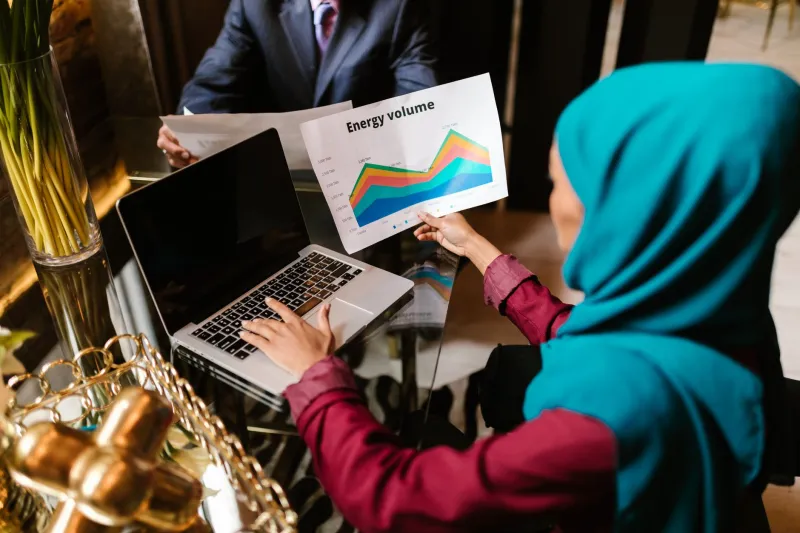
Time spent answering questions about your faith is time not spent on the work that gets you promoted. Emotional energy directed toward managing colleagues' perceptions is energy not directed toward your own development. And the constant pressure to be a "good ambassador" — agreeable, unthreatening, endlessly patient — can quietly warp how you show up professionally.
"I was so focused on being likable that I wasn't being ambitious," Samira says. "I was managing relationships instead of managing projects. And when I finally got honest with myself about it, I realized I'd been playing a role that had nothing to do with my actual job description."
There's also the psychological toll of what researchers call "identity taxation" — the cognitive load of constantly code-switching, self-monitoring, and managing how your identity is perceived. It's real, it's measurable, and it compounds over time.
Practical Ways to Push Back — Without Burning It Down
Here's the good news: you don't have to keep paying the full bill. There are ways to set limits that are professional, sustainable, and genuinely effective.
Redirect with confidence. When someone asks you to represent Islam, it's okay to say, "That's a big question — I can only speak to my own experience." This is accurate, it's not confrontational, and it gently removes you from the spokesperson role.
Use the pause. You are not required to answer immediately. "Let me think about that" is a complete sentence. It also gives you a moment to decide whether you actually want to engage.
Name it when it's appropriate. With trusted colleagues or in the right setting, it's worth saying directly: "I've noticed I get a lot of questions about being Muslim at work, and I want to be honest that it can be a lot to carry." You'd be surprised how often people genuinely don't realize the cumulative weight of what they're asking.
Find your people. Muslim Employee Resource Groups exist at more companies than you might think, and even informal networks can provide the kind of solidarity that makes the daily grind more bearable. You shouldn't have to navigate this alone.
Stop apologizing for existing. This one's harder to operationalize, but it might be the most important. You are not responsible for every perception, every headline, every question your presence raises in someone else's mind. You are responsible for your work. Do that.
The Bigger Picture
The burden of representation is real, but it doesn't have to define your career. Muslim women are building companies, leading teams, breaking into industries that weren't designed with them in mind — and they're doing it while carrying this extra weight.
Imagine what becomes possible when some of that weight is set down.
"I've started treating my faith at work the same way I treat other personal things," Hana says. "I'm not going to perform it for anyone, and I'm not going to hide it either. It's mine. And my job is my job. Those two things can coexist without me being the bridge between them 24/7."
That's not a radical position. It's just what it looks like to take up space without apology — which, it turns out, is something Muslim women are getting very, very good at.