Seen Too Much and Not at All: The Strange Double Life of Muslim Women's Bodies
There's a particular kind of exhaustion that comes from being simultaneously too visible and completely unseen. Muslim women in the United States know it intimately. Walk into a room with a hijab and you might as well be wearing a sign that invites commentary — from strangers, coworkers, even well-meaning acquaintances who feel entitled to opinions about your neckline, your pins, your "commitment." But open a mainstream beauty magazine, scroll through a major retailer's campaign, or sit in a doctor's office flipping through pamphlets about women's health, and you've essentially vanished.
This is the modesty paradox. And it's more than a frustrating social dynamic — it shapes how Muslim women see themselves, advocate for their own needs, and move through the world.
The Commentary That Never Stops
Let's start with the visibility piece, because it's relentless. Muslim women in America report that their bodies — specifically, the choices they make about covering them — are treated as perpetually open for debate. The woman in the office who asks, "Aren't you hot in that?" The relative who wonders, "Do you have to wear it?" The stranger on the subway whose stare lingers just long enough to register as judgment. The social media commenter who slides into a hijabi creator's replies with an unsolicited "you're so brave" — as if existing is an act of courage that requires acknowledgment.
This kind of hyper-visibility is exhausting in a very specific way: it reduces Muslim women to their appearance, to the single visible marker of their faith, and demands that they constantly justify or explain a choice that is, frankly, none of anyone's business. It's a form of bodily surveillance that non-Muslim women rarely face at the same frequency or intensity.
And here's the cruel irony — Muslim women who choose not to cover, or who wear their hijab loosely, or who shift their practice over time, often face a different but equally relentless version of this scrutiny. The commentary doesn't disappear; it just changes tone. Suddenly you're "less Muslim" or "giving in to Western culture." The body is still the battleground. The audience just shifts.
The Erasure That Happens in Plain Sight
Flip the coin and the picture gets even more complicated. For all the attention Muslim women's bodies receive in public discourse, they are strikingly absent from the mainstream spaces where women are supposed to feel seen in a positive, affirming way.
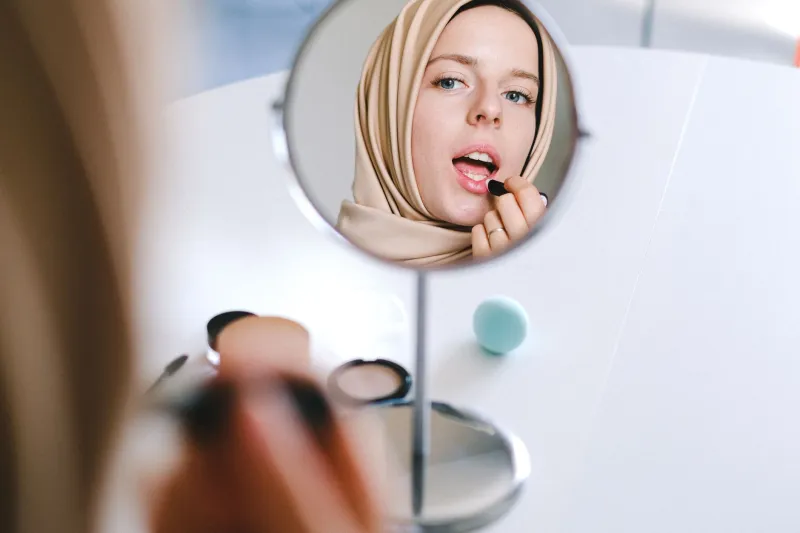
Think about the last major beauty campaign you saw from a drugstore brand. The last Sports Illustrated feature that centered a woman who covers. The last time a primetime TV show had a Muslim woman character whose storyline wasn't about her religion, her trauma, or her "liberation" from both. The last time a plus-size, hijab-wearing woman of color was the face of a national wellness campaign.
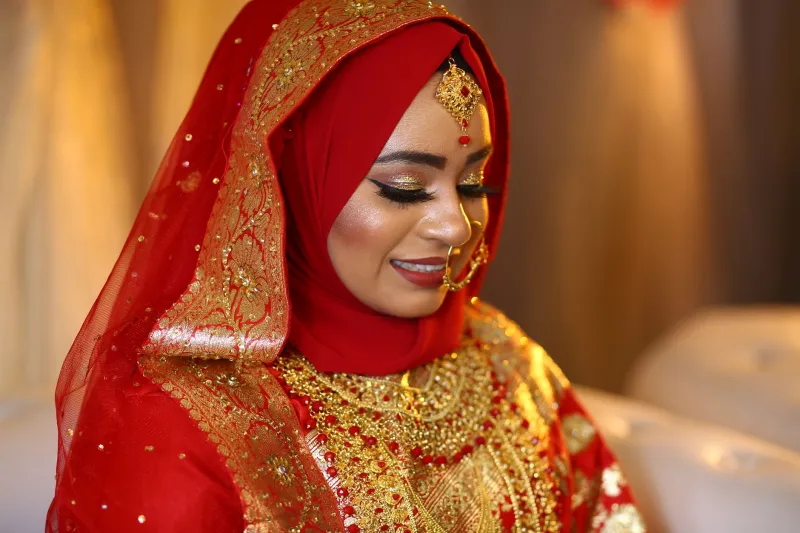
This erasure isn't accidental — it's the product of an industry that still defaults to a very narrow definition of who gets to be beautiful, desirable, or aspirational. Muslim women, particularly those who visibly practice their faith, are treated as a niche at best and invisible at worst. The message, delivered without words but received loudly, is: your body exists for commentary but not for celebration.
What It Does to Your Sense of Self
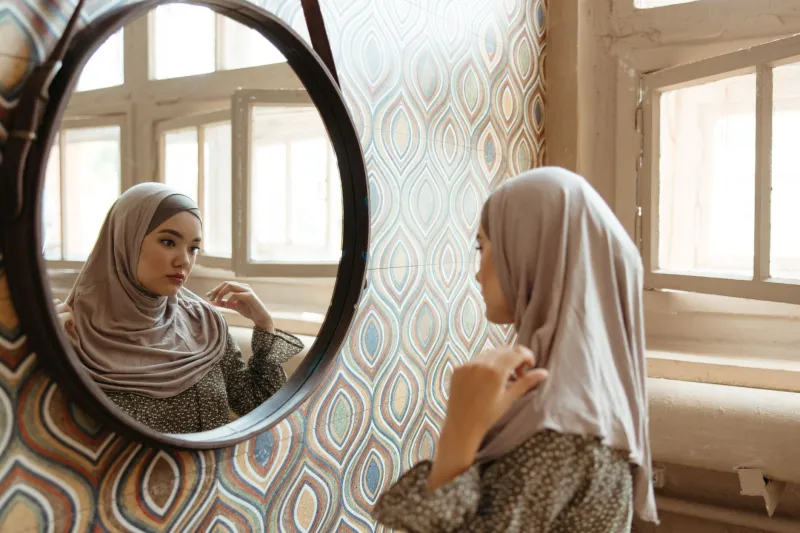
Living inside this contradiction does something to you. It creates a fragmented relationship with your own body — one where you're hyper-aware of how others perceive your exterior while simultaneously struggling to find your reflection in spaces that are supposed to celebrate womanhood.
For some women, this manifests as a kind of preemptive self-erasure. You stop expecting to see yourself in fashion spreads or wellness content, so you stop looking. You start filtering your own self-expression through the imagined lens of whoever might be watching — the coworker, the stranger, the algorithm. You shrink.
For others, it sparks something different: a fierce, almost defiant reclamation. You seek out the Muslim beauty bloggers and the modest fashion brands and the hijabi fitness influencers, not just because they're relatable but because they're proof that your body does get to be celebrated, on its own terms.
Both responses make complete sense. And most Muslim women cycle between them, sometimes within the same week.
The Healthcare Blind Spot
The visibility-invisibility paradox plays out in some genuinely dangerous ways in healthcare settings. Muslim women are less likely to receive culturally competent care that accounts for their modesty preferences, less likely to be represented in clinical research, and more likely to encounter providers who either over-focus on their religious identity or ignore it entirely.
A woman who prefers a female provider for gynecological care shouldn't have to fight for that accommodation. A woman who wears hijab shouldn't have to explain to a radiologist why she'd prefer a private space to remove it. These aren't extraordinary requests — they're basic dignity. But when a patient population is rendered invisible in medical education and training, their needs become invisible too.
Advocating for yourself in a doctor's office is hard enough. Doing it while also managing the weight of being simultaneously hyper-scrutinized and culturally erased? That's a tax that compounds quietly over time.
Dating, Desire, and the Right to Be Wanted
The romantic landscape adds yet another layer. Muslim women navigating dating — whether through apps, community setups, or their own social circles — often find themselves in a space where their visibility as a "Muslim woman" precedes any other aspect of their identity. They're fetishized by some, dismissed by others, and frequently reduced to a set of assumptions before they've said a word.
At the same time, mainstream dating culture barely acknowledges their existence. The rom-com doesn't feature her. The dating advice column isn't written for her specific experience. The idea that a visibly Muslim woman might be navigating desire, attraction, and the very human need to be wanted — on her own terms, within her own values — rarely makes it into the broader cultural conversation.
Reclaiming desire and bodily autonomy in this context is its own kind of radical act.
The Reclamation Is Already Happening
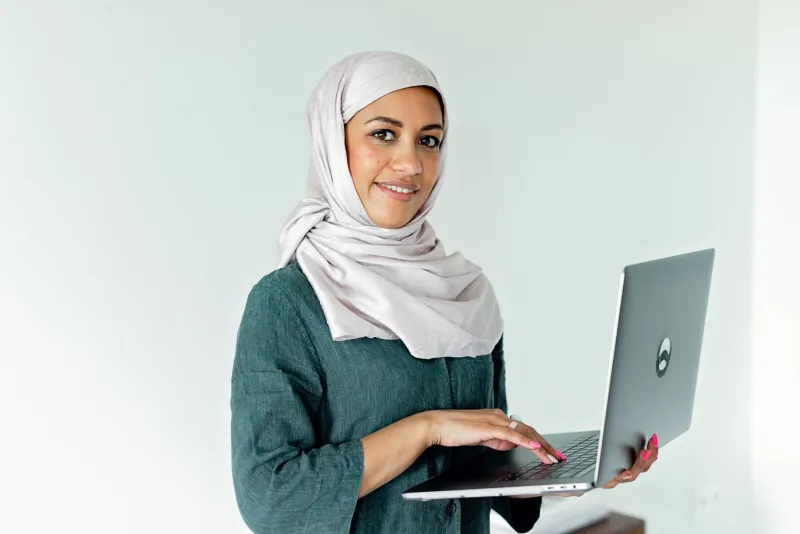
Here's what's true, though: Muslim women are not waiting for mainstream culture to catch up. They're building the visibility they were denied. The modest fashion industry has exploded. Muslim beauty creators are commanding massive audiences and forcing brands to pay attention. Healthcare advocates are pushing for culturally competent care. Muslim women are writing the rom-coms, launching the wellness brands, and showing up on social media with a clarity about who they are that no amount of unsolicited commentary can touch.
The paradox hasn't disappeared. The scrutiny is still there. The erasure is still real. But so is the reclamation — loud, creative, and completely unapologetic.
Your body doesn't exist to be debated by strangers or erased by industries that haven't caught up yet. It exists for you. That's not a radical idea. It's just the truth — and more Muslim women are living it out loud every single day.