Full Face, No Apologies: The Unspoken Complexity of Muslim Women and Makeup
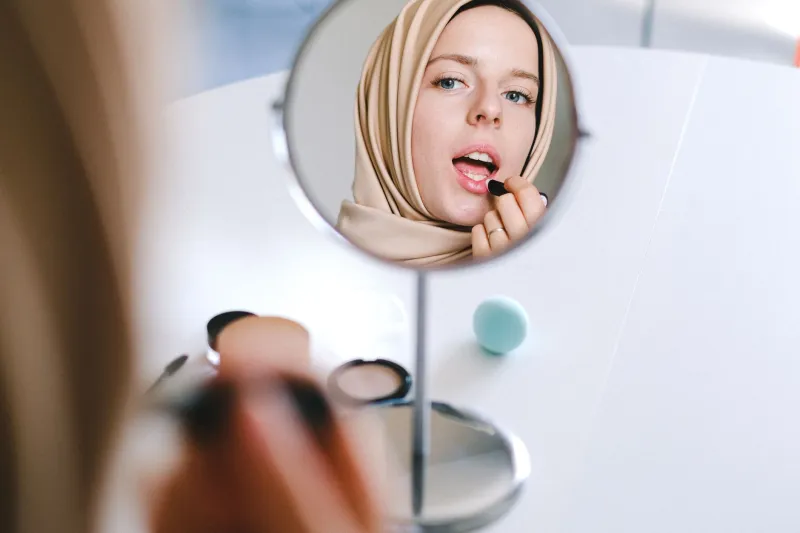
Let's be honest: nobody warned us that owning a beauty blender would come with this much unsolicited commentary.
For Muslim women navigating life in the US, makeup sits at a peculiar crossroads — one where religious interpretation, cultural pressure, family expectations, and personal identity all crash into each other like bumper cars at a county fair. And somehow, everyone from your aunt at Eid dinner to a stranger on TikTok feels qualified to weigh in.
The conversation is long overdue. So let's actually have it.
The Assumption Nobody Talks About
There's a persistent — and honestly exhausting — assumption baked into mainstream American culture: that a woman in hijab must also be makeup-free. As if modesty is a package deal, a bundle you either buy in full or return entirely.
Walk into a Sephora in hijab and you might catch a sales associate looking mildly surprised when you reach for a full-coverage foundation. Post a beat face on Instagram and watch the comments section split between "Mashallah, gorgeous" and "isn't that haram though?" The assumption conflates covered hair with a rejection of all beauty ritual, which misreads both Islam and the women who practice it.
The reality? Muslim women in America are some of the most intentional beauty consumers out there — and their relationship with cosmetics is far more layered than any outsider narrative gives them credit for.
Faith, Fiqh, and the Foundation Debate
Here's where it gets nuanced. Islamic scholarship on makeup isn't monolithic — not even close. Opinions range widely depending on madhab (school of thought), cultural background, and individual scholarly interpretation. Some scholars distinguish between wearing makeup in private versus public spaces. Others focus specifically on the intention behind adornment. Many draw a line at makeup worn to attract the attention of non-mahram men, while considering personal grooming or beautifying for a spouse entirely permissible — even encouraged.
What this means in practice: two women sitting next to each other at Friday prayers might have completely different, equally faith-rooted approaches to their morning routine. One does a full glam. One does SPF and chapstick. Both are operating from sincere conviction.
The problem arises when either woman feels the need to justify her choice to the other — or worse, to the internet.
The Cultural Layer Nobody Warned You About
Religion is only one piece of this puzzle. Culture does a lot of heavy lifting too, and it doesn't always lift in the same direction.
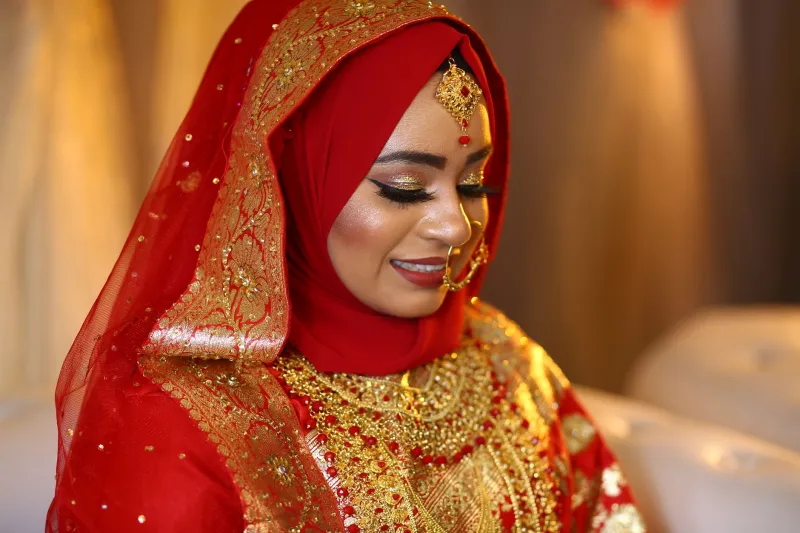
For South Asian Muslim women, elaborate beauty rituals are often deeply embedded in tradition — intricate bridal makeup, henna, skincare passed down through generations. Makeup, in many of these communities, is a love language. For Arab American women, bold eye looks and defined brows can carry a sense of cultural pride and femininity that feels inseparable from identity. Meanwhile, some women raised in more conservative immigrant households were taught that visible makeup signals a kind of moral looseness — a message absorbed early and hard to shake, regardless of what adult scholarship might say.
And then there's the American context layered on top of all of that. Living in a country where beauty standards are aggressively marketed, where the "no-makeup makeup look" costs $300 in product, and where women are simultaneously told to embrace their natural beauty AND buy seventeen serums — it's a lot. Muslim women don't get to opt out of that noise just because they've got bigger theological questions to sort through first.
The Gray Area Is Where Most of Us Actually Live
Ask around and you'll find that the majority of Muslim women in America don't land at either extreme. They're not doing a full editorial beat every single day, and they're not categorically opposed to mascara. They're doing something far more human: figuring it out as they go.
Some women wear full makeup everywhere except the mosque, where they feel it sends the wrong message to the community they're trying to connect with spiritually. Some wear it only for their spouse, treating it as an intimate act of care. Some go full glam on weekends and bare-faced on weekdays, simply because they feel like it. Some went through a phase of rejecting makeup entirely as a form of resistance — against Western beauty standards, against the male gaze, against the pressure to perform femininity — and came back to it on their own terms years later.
None of these approaches are contradictions. They're all just women making choices about their own faces.
When Other Muslims Become the Loudest Critics
Let's not pretend the judgment only comes from outside the community. Sometimes the most pointed commentary comes from within.
The hijabi who gets told she's "defeating the purpose" of modesty by wearing bold lipstick. The non-hijabi who gets told her makeup is irrelevant because she's "already showing her hair anyway." The woman who posts a no-filter selfie and gets praised for her "natural beauty" in a way that subtly shames her friend who posted a contoured look the day before.
This internal policing is real, and it's tiring. It often masquerades as religious concern while actually functioning as social control — a way of enforcing a particular aesthetic ideal under the cover of piety. And it disproportionately targets women who are already doing the hard work of navigating faith and identity in public.
Reclaiming the Brush
Here's what a genuinely progressive, faith-rooted conversation about Muslim women and makeup actually looks like: it centers the woman.
Not the scholar's opinion of her. Not her mother-in-law's raised eyebrow. Not the Instagram comment section. Her.
If she's made a thoughtful, informed decision about her beauty practice — whether that means a bare face or a full cut crease — that decision deserves respect. Full stop. Islam has never asked Muslim women to outsource their personal discernment to community opinion polls.
Beauty, at its best, is a form of self-expression. For Muslim women, it can also be a form of joy, of ritual, of cultural connection, of intimacy, and yes — sometimes of quiet resistance. The woman beating her face before a job interview isn't less devout than the woman who isn't. The woman who skips makeup entirely isn't more righteous than the one who doesn't.
They're both just women. Living their lives. With or without highlighter.
And honestly? Both of them deserve to do it without having to explain themselves to anyone.