In the Frame but Not in the Room: The Truth About Muslim Women's Visibility in America

Photo by Photo by Microsoft 365 on Unsplash on Unsplash
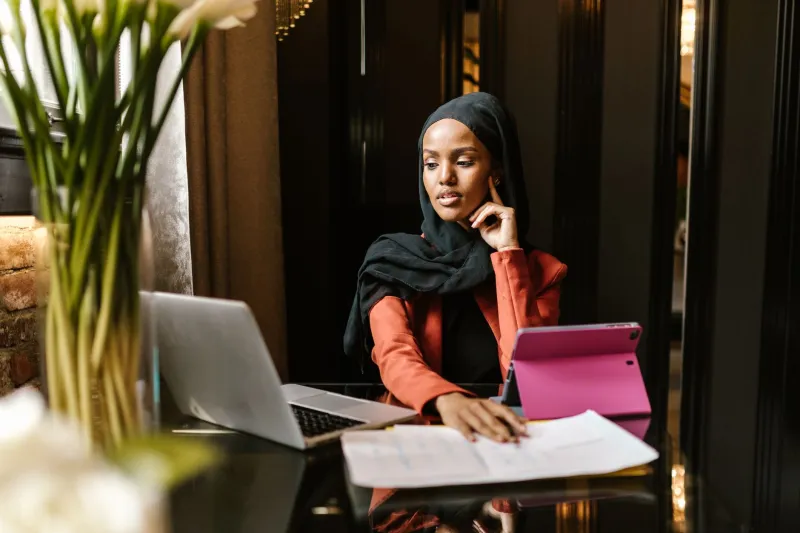
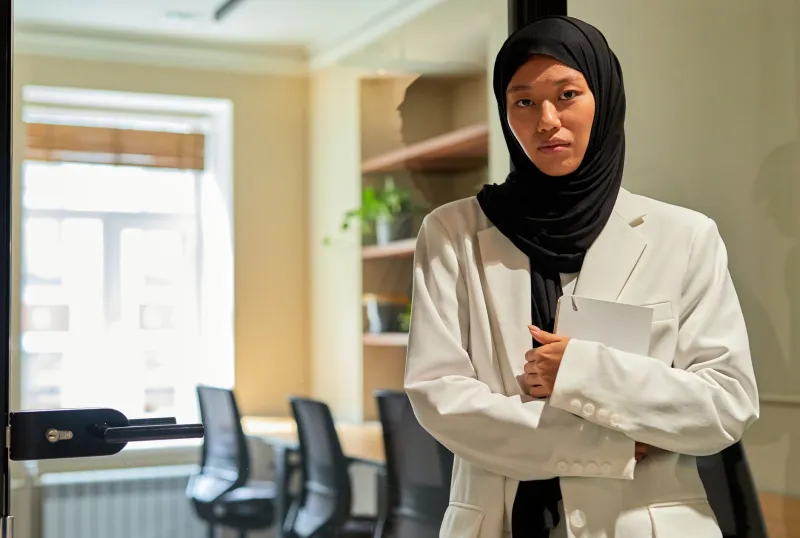
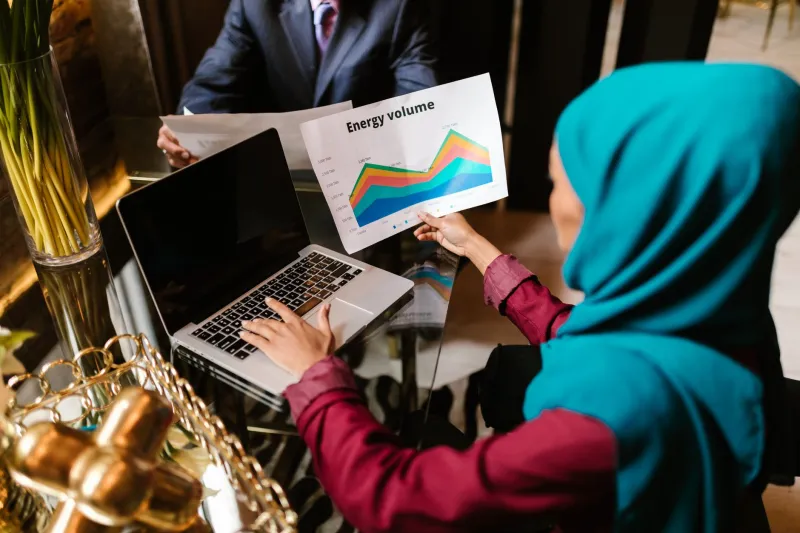
Somewhere in a corporate headquarters, a marketing deck is being finalized. On slide fourteen, there's a stock photo of a woman in a hijab, smiling confidently at a laptop. She represents diversity. She represents inclusion. She represents a brand that gets it.
She is not in the meeting where the deck is being presented.
This is the visibility paradox in its most distilled form: the image of Muslim women is everywhere, but Muslim women themselves — their voices, their decisions, their actual influence — are still largely absent from the rooms where things get decided. And more and more Muslim women are naming it, out loud, without apology.
The Difference Between Being Seen and Being Heard
Representation, as a concept, arrived with a lot of promise. And it has delivered something real — there's no denying that seeing a Muslim woman in a Senate chamber, on a magazine cover, or in a primetime TV role matters, especially to young girls who grew up without those mirrors. Visibility is not nothing.
But visibility is also not the finish line. And treating it like one is one of the more convenient mistakes that institutions make, because it's cheap. A photo op is cheaper than a seat at the table. A diversity hire is cheaper than restructuring who holds power. A campaign featuring a hijabi model is cheaper than actually listening to Muslim women consumers, employees, or constituents.
The gap between symbolic presence and substantive influence is where many Muslim women find themselves living — and it's an exhausting place to be.
Tokenism Has a Texture
If you've experienced tokenism, you know it's not always loud. It doesn't usually announce itself. It has a texture — subtle, ambient, and persistent.
It's being the only Muslim woman in a leadership meeting and being asked to weigh in on "the Muslim community's perspective" on something that has nothing to do with your actual job. It's watching your ideas get credited to someone else after you've left the room. It's being featured prominently in the company's Black History Month and Women's History Month communications while your actual promotion has been pending for eighteen months.
Muslim women in professional spaces across the US describe a particular kind of double bind: be visible enough to satisfy diversity metrics, but not so visible that you make people uncomfortable. Speak up enough to seem engaged, but not so much that you're labeled difficult. Represent your faith enough to be a symbol, but not so much that your faith becomes a liability.
It's a narrow lane. And it's deliberately narrow.
The Pressure to Represent Everyone
One of the specific burdens that comes with being a "first" or an "only" is the weight of representation itself. When there's one Muslim woman in the room, she doesn't just represent herself. She represents 1.8 billion people, a 1,400-year religious tradition, dozens of ethnic communities, and every stereotype and misconception the people in that room have ever absorbed from cable news.
That's not a job description. That's an impossible assignment.
Muslim women in media, politics, and corporate America talk about this constantly — the pressure to be palatable enough to stay in the room, authentic enough to maintain credibility with their communities, and composed enough to handle every microaggression without letting it show. The emotional labor involved is staggering, and it's almost never compensated or acknowledged.
And when Muslim women do speak candidly — about Islamophobia, about foreign policy, about their own experiences of discrimination — the response is often swift and punishing. The visibility that was celebrated when it was decorative becomes threatening the moment it becomes substantive.
What Actual Influence Looks Like
So what does it look like when Muslim women move from visibility to genuine power? It looks like editorial control, not just editorial inclusion. It looks like a Muslim woman executive who has hiring authority, budget authority, and the organizational backing to make decisions that stick. It looks like Muslim women in politics who can vote, legislate, and build coalitions — not just serve as proof points in someone else's diversity narrative.
It also looks like Muslim women building their own structures. Across the country, Muslim women are launching media companies, think tanks, nonprofits, and investment funds specifically because they've recognized that waiting to be included in existing institutions is a losing strategy. If the room doesn't have a seat for you, some women are deciding to build a different room entirely.
This isn't resignation. It's strategy. And it's producing results that the symbolic visibility playbook never could.
The Audience Isn't Fooled
Here's something worth saying plainly: Muslim women, as an audience, are not fooled by performative representation. They can tell the difference between a brand that hired a hijabi model for a campaign and a brand that actually employs Muslim women in positions that matter. They can tell the difference between a news outlet that occasionally features Muslim women's stories and one that has Muslim women shaping its editorial priorities.
That discernment is a form of power too. Consumer behavior, voting patterns, and media consumption all reflect it. Muslim women are increasingly directing their attention, loyalty, and dollars toward institutions and creators that demonstrate actual respect — not just aesthetic inclusion.
Being Seen Isn't Enough Anymore
The conversation about Muslim women's representation in America is maturing. The early victories — a hijab on a runway, a Muslim woman elected to Congress, a Muslim character on a network drama — were genuinely significant. They shifted something. But they were a beginning, not a destination.
The next chapter is about power. About who gets to make decisions, shape narratives, allocate resources, and define what Muslim women's lives look like in the American imagination. That chapter is being written right now, by Muslim women who are done being symbols and are showing up as architects instead.
The frame was never the point. The room was always the point.