No Seat at the Table, No Map to Find One: The Mentorship Crisis Muslim Women Are Done Ignoring
There's a particular kind of exhaustion that comes from figuring everything out alone. Not the tired-from-working-hard kind — the tired-from-having-no-one-who-gets-it kind. For Muslim women navigating corporate America, that exhaustion is practically a career accessory.
Mentorship has long been treated as the secret sauce of professional success. Study after study confirms it: people with mentors earn more, get promoted faster, and report higher job satisfaction. But here's the thing nobody puts in the Harvard Business Review — those mentorship pipelines were built by and for a very specific kind of professional. And she doesn't usually wear a hijab.
The Invisible Barrier Nobody Talks About
Let's be honest about how traditional professional networking actually works in America. A lot of it happens at happy hours, golf courses, and client dinners where alcohol flows freely. It happens in spaces where small talk defaults to weekend plans, church events, or pop culture references that quietly signal belonging. For Muslim women — especially visibly Muslim women — those spaces carry an extra layer of calculation. Do I go and feel out of place? Do I skip and miss the connection? Either way, I lose.
And it's not just social settings. Mentorship in corporate America often relies on what researchers call "homophily" — the deeply human tendency to connect with people who remind us of ourselves. When the senior leaders in most industries are predominantly white, male, and non-Muslim, the informal sponsorship that greases the wheels of career advancement rarely trickles down to the sister in the boardroom who's trying to navigate her first performance review while also fasting through Ramadan.
The result? Muslim women are frequently left to reverse-engineer careers without a guide. They're smart, driven, and capable — and they're doing it largely in the dark.
Why "Just Find a Mentor" Is Incomplete Advice
The standard career advice sounds simple: find a mentor, join a professional organization, build your network. But that advice skips over the real friction Muslim women face when they try to follow it.
Sometimes it's the exhaustion of being a perpetual explainer — having to spend energy educating a potential mentor about Ramadan, about halal dietary restrictions, about why you might decline certain client events, before you even get to talk about your actual career goals. Sometimes it's the quiet bias that shapes who gets tapped for mentorship in the first place. Research consistently shows that women of color are less likely to be sponsored by senior leaders, and Muslim women — navigating both gender and religious identity — often fall through multiple gaps at once.
And then there's the specific loneliness of being the only one. When you're the only visibly Muslim woman on your floor, there's no one to debrief with after a microaggression in a meeting. No one who instinctively understands why the holiday party feels complicated. No one who's already figured out how to ask for Eid off without making it weird.
That isolation isn't just emotionally draining. It's professionally costly.
Building the Table When You Weren't Invited to the Existing One
Here's where the story shifts — because Muslim women aren't sitting around waiting for the system to fix itself.
Across industries and cities, a quiet revolution in peer mentorship is taking shape. Muslim women's professional networks are emerging in tech, law, medicine, finance, and media — sometimes formal, sometimes just a group chat that turns into a lifeline. Organizations like the Muslim Women's Collective and various local Muslim professional associations are creating intentional spaces where career conversations can happen without the overhead of constant self-explanation.
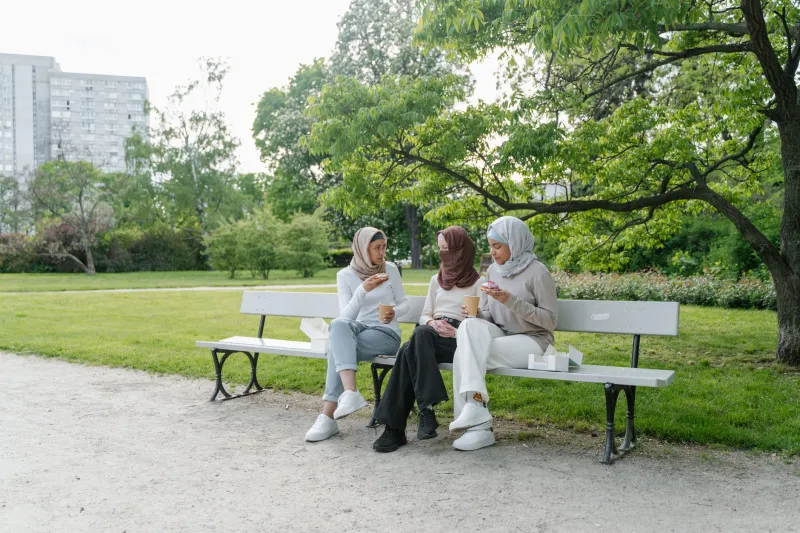
Peer mentorship circles — small groups of women at similar career stages who meet regularly to share challenges, celebrate wins, and hold each other accountable — are proving especially powerful. Unlike traditional top-down mentorship, peer circles distribute the wisdom. Everyone teaches, everyone learns. And because the group shares cultural and religious context, conversations can go deeper, faster.
Digital spaces are accelerating this. LinkedIn communities, private Instagram groups, and Discord servers built specifically for Muslim professional women are connecting sisters across geographies who would never have found each other otherwise. A Muslim woman in a finance role in Dallas can get real talk advice from someone who navigated the same firm culture in New York. That kind of specific, contextualized guidance is invaluable — and it's being built from the ground up.
Finding Allies Beyond Your Own Community
Building within the community is essential. But it's not the whole picture.
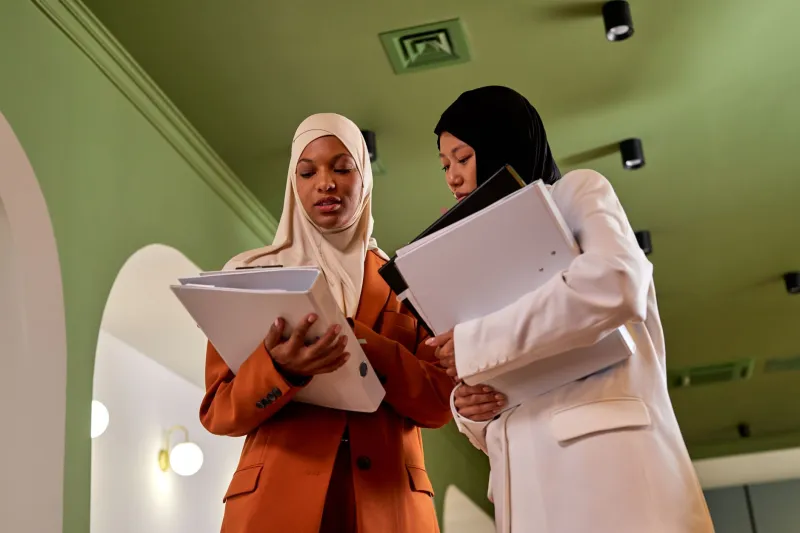
Forward-thinking Muslim women leaders are also getting strategic about finding allies outside their immediate circle — non-Muslim colleagues, managers, and senior leaders who are genuinely invested in their growth. These allies won't share every experience, but they can open doors, advocate in rooms you're not in, and use their proximity to power on your behalf.
The key is being intentional about who those allies are. Look for leaders who have a demonstrated track record of sponsoring diverse talent — not just talking about inclusion, but actually putting their political capital behind it. Seek out mentors who ask good questions and listen more than they lecture. And don't be afraid to be direct about what you need: "I'm looking for someone who can help me navigate X" is a far more productive opening than a vague coffee chat.
It also helps to come prepared. The Muslim women making the most of cross-cultural mentorship relationships tend to be clear communicators about their goals and their constraints. They don't leave their mentors guessing. That clarity builds trust — and trust is the foundation of any mentorship worth having.
The Ripple Effect Is Real
When Muslim women do break through — when they land the senior role, build the business, or earn the influence — the question becomes what they do with it. And increasingly, the answer is: they come back for the next woman.
This is the ripple effect that makes peer mentorship and community investment so powerful. Every Muslim woman who makes it through a difficult industry and then turns around to mentor someone behind her is actively dismantling the gap. She's creating the guide she never had. She's normalizing the presence of Muslim women in spaces where they've historically been invisible.
That's not just good for individual careers. It's good for entire communities. When Muslim women are well-represented in positions of influence, they shape culture, policy, hiring practices, and workplace norms. They make it incrementally easier for the next woman to walk in without having to explain herself from the door.
So What Do You Do Right Now?
If you're a Muslim woman mid-career and feeling the weight of that guidance gap, here's the practical starting point: stop waiting for the perfect mentor to appear and start building the network you actually need.
Seek out Muslim professional communities in your city or online. Join one. Show up consistently. Offer something before you ask for anything. Look for a peer mentorship circle or start one — even three people meeting monthly over Zoom can change the trajectory of a career.
And if you're further along in your journey? You already know what this article is asking of you. Someone behind you is in the dark. Turn around and be the light you needed.
The mentor gap is real. But so is the power of Muslim women who decide to close it — together.