Scroll, Style, Sell: How Muslim Creators Are Rewriting the Rules of the Influencer Economy
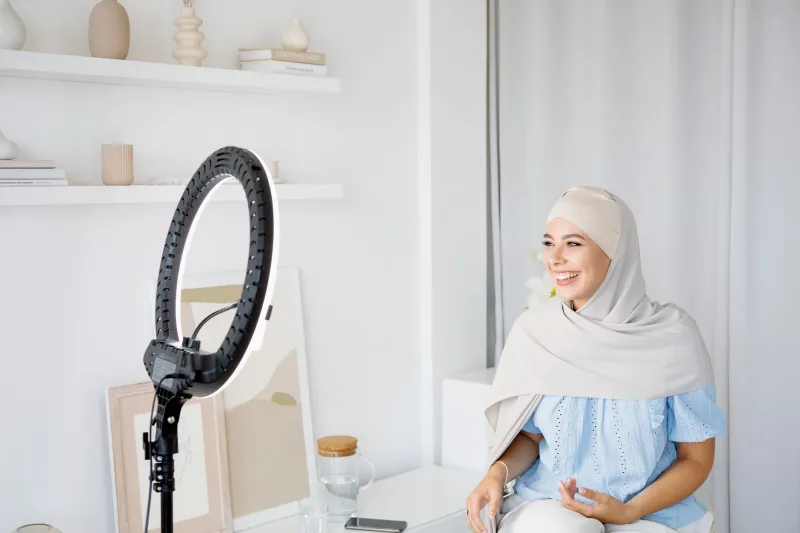
When Dina Tokio posted a YouTube video in 2011 showing how she styled her hijab in a turban wrap, she probably didn't know she was laying groundwork for an entire industry. Over a decade later, the modest fashion creator economy has exploded into a multi-million dollar space — one where Muslim women aren't just participating in the influencer market, they're actively reshaping it.
This isn't a niche story anymore. It's a mainstream one.
From Underrepresented to Undeniable
For years, the social media beauty and fashion landscape was built around a very specific visual template: conventionally thin, largely white, and — most relevantly — dressed in ways that had nothing to do with modesty. The algorithm rewarded skin, the brand deals followed, and Muslim women scrolled through feeds that simply didn't reflect them.
So they built their own.
Creators like Habiba Da Silva, Leena Asad, and a growing roster of American-based influencers — many of them first or second-generation immigrants navigating both Muslim identity and very online American culture — started filling that gap. They posted outfit-of-the-day content featuring hijabs and maxi skirts. They did "get ready with me" videos that included modest swimwear and prayer outfit inspo. They reviewed drugstore foundations with deeper undertones and talked about finding sunscreen that didn't pill under a hijab.
And people showed up — in the millions.
"I started posting because I was frustrated," says Zainab Malik, a 27-year-old content creator based in Houston with over 400,000 Instagram followers. "I could not find a single person online who looked like me and dressed like me and was just, like, living her life in a relatable way. So I became that person. And it turns out a lot of other women were looking for the same thing."
The Business of Being Modest
Make no mistake: this is a business. The global modest fashion market was valued at over $300 billion in recent estimates, and brands have taken notice. Muslim creators are increasingly landing partnerships with major retailers — from ASOS and H&M to Nordstrom and Target — as well as with beauty brands that are finally waking up to the purchasing power of Muslim American consumers.
But the monetization landscape for modest creators is more complicated than it might appear. Many Muslim influencers describe turning down partnerships that conflict with their values — alcohol brands, certain swimwear companies, or campaigns that feel exploitative of their identity without genuinely centering it.
"I've had brands approach me because they want to seem inclusive, but the product has nothing to do with my audience and they want me to pretend it does," says Farah Yousuf, a beauty creator in New Jersey with a following that spans TikTok and YouTube. "I'd rather have fewer brand deals and keep my community's trust. That trust is the whole thing."
This selectivity, while financially limiting in the short term, has built something more durable: genuine audience loyalty. Modest fashion communities online tend to be highly engaged, which makes their creators genuinely attractive to brands willing to invest in authentic alignment over cheap visibility.
Redefining What "Relatable" Looks Like
One of the most quietly radical things modest Muslim creators are doing is dismantling the idea that relatability in beauty and fashion content requires a particular body or a particular amount of skin. They're proving — with data, with engagement rates, with sold-out product links — that women connect deeply with creators who reflect their actual lives.
This matters beyond the Muslim community, too. The rise of modest fashion influencers has contributed to a broader cultural shift in what mainstream fashion considers aspirational. Maxi dresses are having a perennial moment. Oversized silhouettes dominate runways. Layering is everywhere. Some of this is coincidence; some of it is direct influence.
"I genuinely believe modest creators have moved the needle on how mainstream fashion talks about coverage," says Aaliya Chen, a fashion industry analyst who tracks influencer-brand relationships. "When you have millions of people actively engaging with content that celebrates covered aesthetics, that shapes what designers and retailers think is commercially viable."
Beauty Standards, Reclaimed
The beauty side of this creator economy is where things get particularly interesting. Muslim beauty influencers are navigating a space historically built on standards that center uncovered hair, specific body ideals, and a Eurocentric baseline for what's considered beautiful.
In response, many Muslim beauty creators have made a point of showcasing inclusive beauty routines that are explicitly designed for their realities. Skincare content that addresses hyperpigmentation common in darker skin tones. Hijab-friendly hair care for women whose hair health matters even when it's not on display. Makeup tutorials that consider both full-glam and no-makeup aesthetics without judgment.
There's also a growing body of content that addresses beauty through the lens of Islamic values — not in a restrictive, finger-wagging way, but in an empowering one. Discussions about skincare as self-care, about adornment as joy, about the confidence that comes from feeling beautiful in a way that aligns with your faith.
"I want my followers to feel like taking care of themselves is an act of self-respect, not vanity," says Farah. "Islam actually has a beautiful relationship with beauty and cleanliness and self-presentation. I just want to tell that story."
The Pressures Nobody Posts About
For all the opportunity in this space, the pressures are real and worth naming. Muslim creators occupy an uncomfortable position: they're simultaneously expected to be ambassadors for their faith (whether they want to be or not), trend-forward enough to compete in a fast-moving content landscape, and authentic enough to maintain community trust — all while dealing with the same burnout, algorithm anxiety, and online harassment that every creator faces, plus a layer of Islamophobia that never fully disappears.
Comment sections can be brutal. Some of the harassment comes from outside the Muslim community — people who question whether a Muslim woman should be on social media at all. Some of it, painfully, comes from within — criticism that a creator isn't modest enough, or is "selling out" by working with mainstream brands.
"You're always being evaluated by someone," says Zainab. "Either you're too religious for mainstream brands or not religious enough for some followers. You just have to get really clear on who you're doing this for and why."
What Comes Next
The modest fashion creator economy isn't a trend with an expiration date — it's a structural shift in who gets to be a tastemaker. As Gen Z Muslim women grow into their purchasing power and their content creation ambitions, the space will only expand. And as mainstream fashion continues to absorb and — let's be honest — often profit from modest aesthetics without always crediting them, the creators who built this world deserve their flowers.
They're not just influencers. They're architects of a new visual language — one that says you can be fashionable, faithful, funny, ambitious, and fully yourself, all at once, all on screen.
And honestly? The algorithm is finally starting to catch up.