Achieving Everything Your Parents Prayed For — And Still Feeling Completely Alone in It

Photo by Photo by Bayu Nugroho on Unsplash on Unsplash
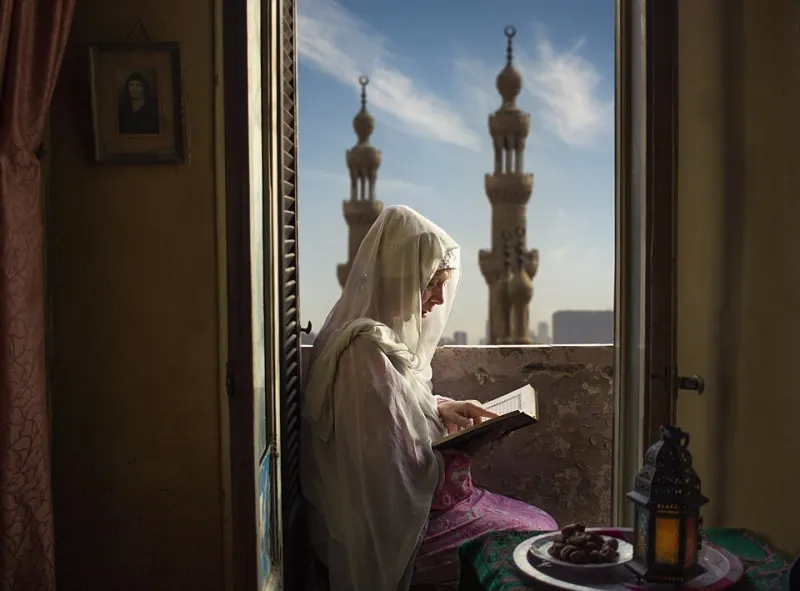
The day Hana defended her doctoral dissertation, her mother cried. Not because she understood exactly what a PhD in biochemistry meant in practical terms — she didn't, not fully — but because she understood that her daughter had gone further than she ever could have imagined. Further than the village she left in Yemen. Further than the English she learned in night classes. Further than the ceiling she had quietly accepted as her own.
Hana cried too. But not entirely from joy.
"There was this moment," she says, "where I looked out at the room and realized there was no one there who really understood what I had just done. My parents were proud of something they couldn't fully see. My colleagues were celebrating something they'd never had to fight for. I was somewhere in between, alone in both directions."
This is the experience that doesn't make it into the graduation photos. The one that first-generation Muslim women know intimately but rarely have language for — the peculiar grief of becoming someone your family prayed for but cannot fully follow.
The Weight of the Dream You're Carrying
First-generation achievement in Muslim immigrant families is often a deeply communal project. Parents work double shifts, make strategic sacrifices, redirect their own ambitions into their children's futures. The expectation of success isn't just personal — it's the whole point of the immigration story. You are the return on an enormous investment of suffering and hope.
That's a beautiful thing. It's also an enormous weight.
For Muslim women specifically, the pressure has an added dimension. Succeeding professionally while also being a "good Muslim woman" — modest, family-oriented, not too independent, not too Western — requires a constant negotiation that their non-Muslim peers simply don't face. And their immigrant parents, shaped by different contexts, sometimes can't fully appreciate the specific battles their daughters are fighting to get to the top.
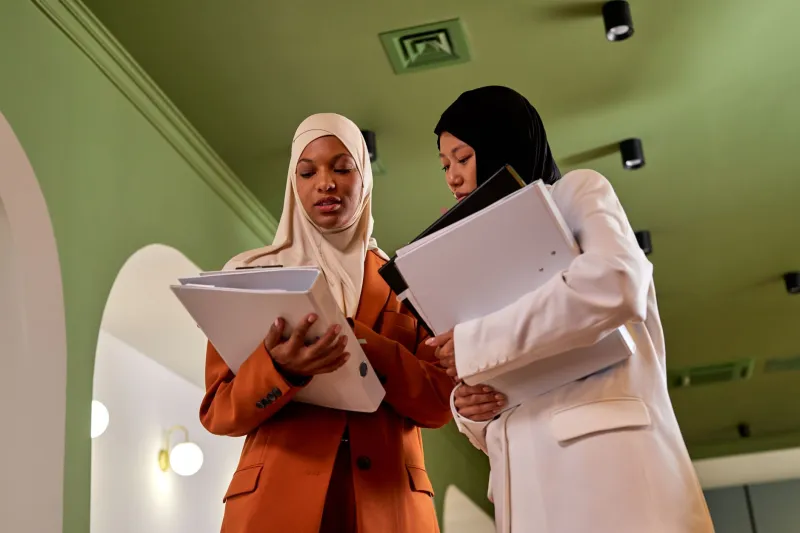
"My dad is proud that I'm a lawyer," says Sana, 29, who grew up in a Pakistani American household in New Jersey. "But he doesn't know what it took to get here. The professors who doubted me. The firms that didn't call back. The way I had to dress, talk, perform to even be considered. He sees the result. He missed the whole story."
Success That Doesn't Translate
One of the quieter struggles first-gen Muslim women describe is the difficulty of sharing their wins with the people they love most. A promotion at a tech company, a byline in a national publication, a grant awarded, a patient saved — these milestones can be hard to contextualize for parents whose frames of reference are entirely different.
Sometimes the celebration lands flat, not from lack of love but from lack of shared vocabulary. And sometimes the milestone itself creates anxiety rather than pride — a daughter living alone in another city, working late, moving further from the cultural script that was supposed to define her life.
"I got a fellowship to study abroad and my mom's first question was whether I'd be able to find halal food," says Leila, 26, a public health researcher in Boston. "I laughed, but I also understood. That's how she shows she loves me. She just doesn't have a map for where I'm going."
The Guilt That Lives Between Gratitude and Ambition
First-generation guilt is real, documented, and exhausting. It's the voice that says you're being selfish when you prioritize your career. That you're abandoning your family when you move for a job. That your ambition is ingratitude dressed up as independence. For Muslim women, that guilt often gets a religious coating — the idea that a good daughter, a good Muslim woman, wouldn't want quite so much for herself.
But here's what that framing misses: ambition and loyalty are not opposites. Wanting more for yourself doesn't mean wanting less for your family. In fact, for many first-gen women, the drive to succeed is inseparable from love — love for parents who sacrificed, love for younger siblings watching, love for a community that needs its own representation in rooms it has never entered.
The guilt isn't evidence of a problem. It's evidence of how deeply connected these women are to where they came from, even as they move toward something new.
Building the Bridge Without Burning Down
What first-generation Muslim women are doing — often without naming it — is bridge work. They're translating between worlds, between generations, between the life their parents knew and the life they're building. That's not a small thing. It's exhausting, meaningful, and entirely underacknowledged.
The women doing it best have found ways to bring their families along — not by shrinking their ambitions, but by finding new ways to make those ambitions legible. Explaining what a grant means in terms of the community it will serve. Framing a promotion as security and stability, not just status. Inviting parents into their professional worlds, even imperfectly, so the gap doesn't grow into a gulf.
And they've found each other. The group chats, the professional networks, the late-night phone calls between first-gen friends who just get it — these have become essential infrastructure for women navigating success without a map.
You Are Not Betraying Anyone by Becoming Yourself
If you are a first-generation Muslim woman reading this while sitting with your own version of this story — the pride tangled with guilt, the achievement shadowed by isolation — here is what we want you to hear:
You are not too much. You are not ungrateful. You are not leaving your family behind by going further than they went. You are, in many ways, fulfilling the exact prayer they said over you before you were old enough to understand it.
The distance between your world and theirs is not a failure of love. It's the shape of what they made possible.
You can hold gratitude and grief at the same time. You can be the answer to their prayers and still feel lonely in your success. You can honor where you come from while becoming someone entirely new.
Both things are true. You don't have to choose.