Ambition Is Not Haram: Muslim Women on Building Careers That Don't Require Leaving Faith at the Door
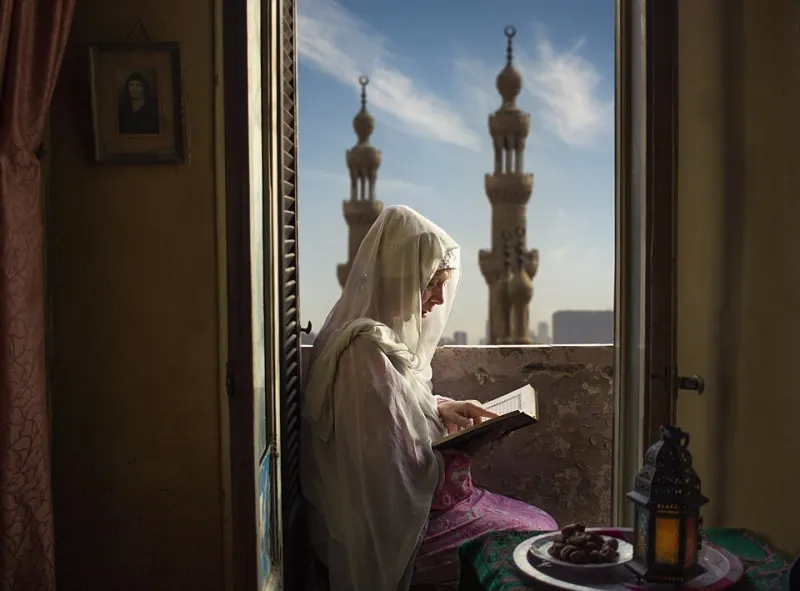
Photo: مصطفى الشربجى, CC BY-SA 4.0, via Wikimedia Commons
There's a version of the story that gets told a lot in Muslim households, mosques, and community WhatsApp groups. It goes something like this: a woman who pursues career success — real success, the kind with power and money and visibility — is either neglecting her family, compromising her values, or quietly losing her faith. The ambition itself is treated as a warning sign. A symptom of something gone wrong.
Muslim women across the country are done with that story. Not because they've abandoned their deen, but because they've actually read it.
The Myth of the Modest Woman Who Wants Nothing
Let's start at the root. The idea that Islam discourages women from professional ambition is not Quranic. It's not prophetic. It is, however, deeply embedded in certain cultural interpretations of what a "good" Muslim woman looks like — and those interpretations have done real damage.
Khadijah bint Khuwaylid, the first wife of the Prophet ﷺ, was a successful entrepreneur who employed her own husband before they married. She was a merchant, a leader, a woman of significant economic power. She is consistently described as one of the greatest people — not just women — in Islamic history. Her ambition was never framed as a flaw. It was part of her excellence.
So when someone tells you that wanting a seat at the table is somehow un-Islamic, they are not citing scripture. They are citing culture. And those are not the same thing.
What Muslim Women in High-Powered Careers Are Actually Experiencing
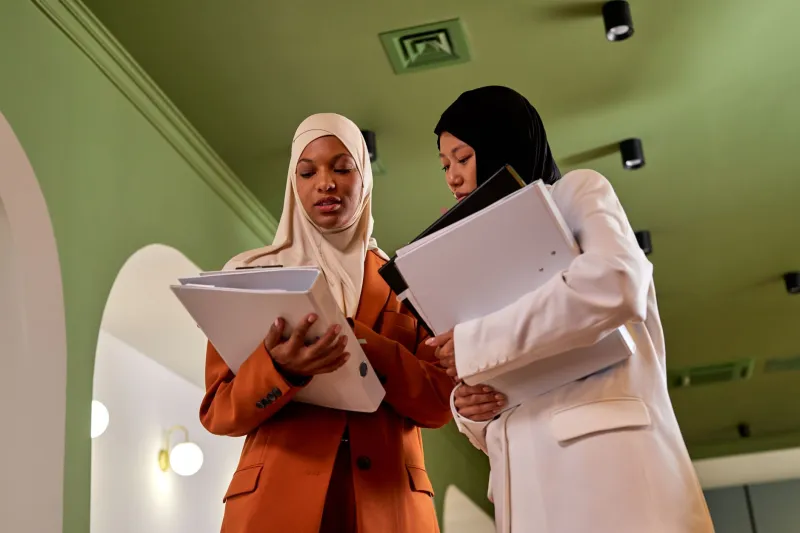
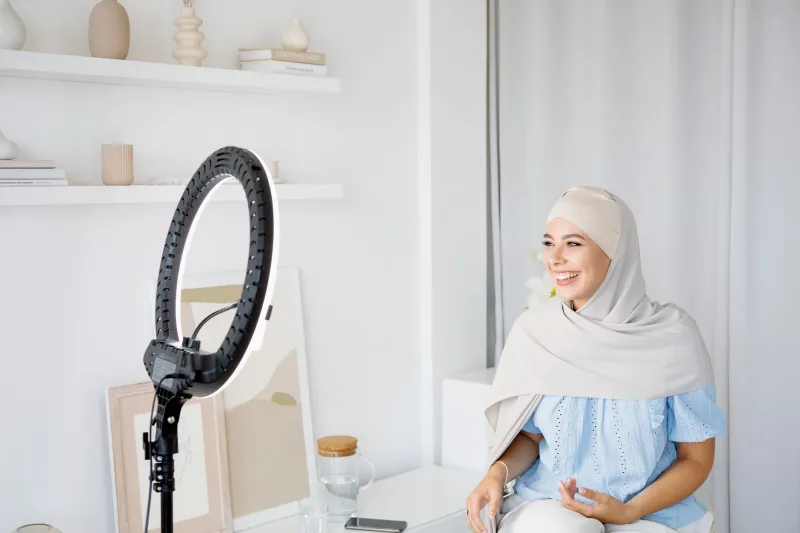
Across the US, Muslim women are running companies, leading hospital systems, arguing cases in federal court, building investment portfolios, and heading academic departments. Some wear hijab. Some don't. Some pray between depositions. Some have prayer apps set to vibrate during board meetings. They are not compromising their faith to do any of this — they are living it.
What many of them describe, though, is the exhaustion of navigating two separate sets of expectations. From the outside world: prove you're not a stereotype, prove you belong, prove your religion doesn't make you less qualified. From within their own communities: don't get too successful, don't outshine the men around you, don't let your career become your identity.
The double bind is real. But so is the refusal to accept it.
Redefining What Success Looks Like in a Faith Context
One of the most powerful shifts happening right now is Muslim women actively reclaiming the definition of success — not from a secular framework and not from a purely traditional one, but from something that integrates both.
For many, that means building wealth intentionally and without shame. The Islamic tradition has an entire framework for ethical finance, entrepreneurship, and wealth distribution. Zakat is a pillar of the faith precisely because wealth, when generated and shared responsibly, is a tool for community flourishing. Muslim women who are building financial independence aren't abandoning their values — they're funding them.
For others, it looks like leadership that's explicitly shaped by Islamic ethics: honesty, fairness, consultation (shura), and accountability. Several Muslim women in corporate America describe their faith as the thing that makes them better leaders — more principled under pressure, more grounded in purpose, more resistant to the kind of ethical drift that derails careers.
The Workplace Spirituality Nobody Talks About
Here's something that rarely makes it into mainstream career conversations: the practice of maintaining salah during a workday is, for many Muslim women, one of the most anchoring things they do. Taking five minutes to step away from a screen, face a direction, and remember that your worth is not your output — that's not a disruption. That's a reset.
Muslim women are increasingly open about how their spiritual practices function as professional tools. Dhikr before a difficult presentation. Istikhara before a major career pivot. Gratitude practices rooted in Islamic tradition that research now confirms are linked to resilience and reduced burnout.
Faith and ambition aren't pulling in opposite directions here. They're feeding each other.
On Navigating Community Expectations
The community piece is complicated, and it deserves honesty. Not every mosque, family, or cultural circle is going to celebrate a woman's promotion the same way they'd celebrate a man's. Some Muslim women describe being subtly discouraged from pursuing graduate school, leadership roles, or careers that require travel. Some are told, explicitly or implicitly, that their ambitions are a threat to their marriageability.
If you're in that environment, here's what we want you to know: the community's comfort with your ambition is not the measure of its validity. You are allowed to want more. You are allowed to build more. You are allowed to take up space in rooms that weren't designed with you in mind and redesign them from the inside.
Finding your people matters enormously here. Muslim professional networks — organizations like the Muslim Women's Alliance, local chapters of Muslim-led professional groups, and informal mentorship circles forming on LinkedIn and Instagram — are creating the infrastructure for ambition to be celebrated rather than tolerated.
The Integration, Not the Compromise
The most powerful thing about watching Muslim women thrive in demanding careers is that so few of them describe it as a compromise. They're not holding their faith in one hand and their career in the other, trying to keep the balance. They're integrating the two into something that looks distinctly, unapologetically their own.
That integration looks different for everyone. For one woman, it's turning down a promotion that required her to compromise her prayer schedule and then finding a better one six months later. For another, it's launching a halal investment fund. For another, it's mentoring the next Muslim woman coming up behind her so she doesn't have to fight the same battles alone.
Ambition, at its best, is just a deep belief that you have something to contribute to the world. Islam has always had room for that. The question was never whether Muslim women were allowed to be ambitious. The question was whether we'd let someone else's discomfort convince us we weren't.