At Home in Your Own Skin: What It Really Means for Muslim Women to Reclaim Their Bodies
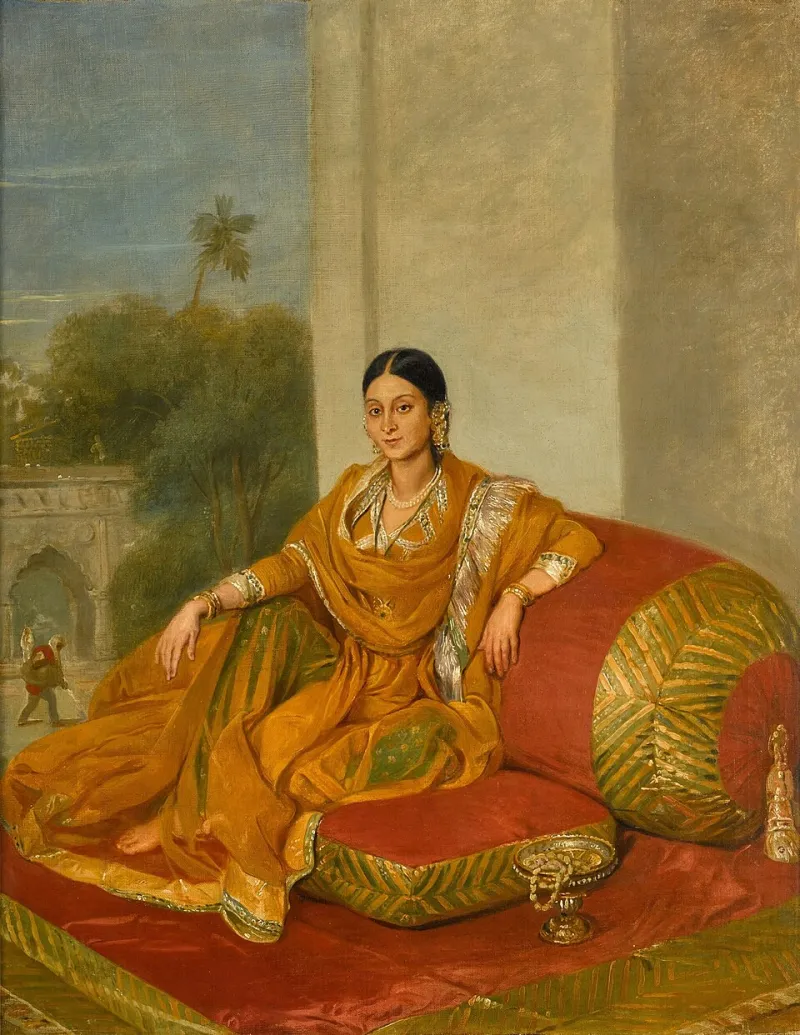
Photo: Arthur William Devis, Public domain, via Wikimedia Commons
Somewhere along the way, the conversation about Muslim women's bodies got hijacked. What started as a theological framework about intention, dignity, and spiritual focus became something else entirely — a set of rules that, depending on who was enforcing them, turned the body into a problem to be managed rather than a self to be inhabited.
And a lot of us felt it. Maybe you still do.
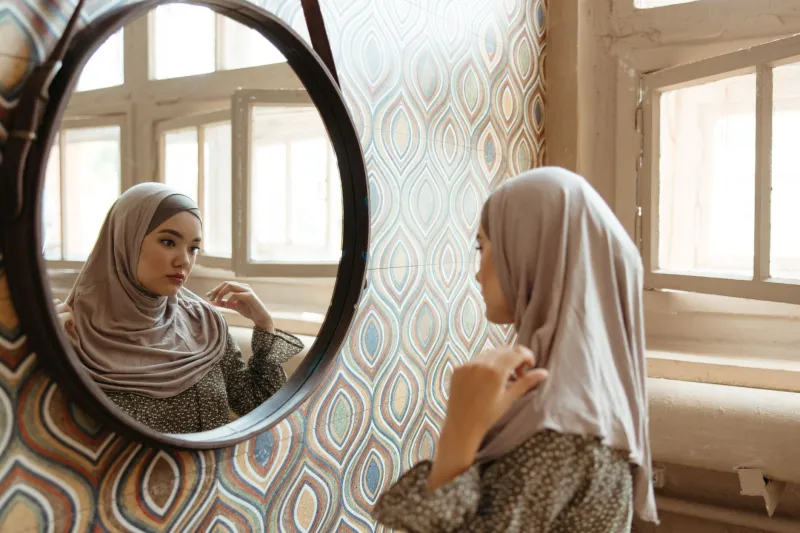
It shows up in different ways. The woman who can't look at herself in the mirror without a running commentary of shame. The one who flinches when her body is discussed, even in a medical context. The one who's so used to thinking about what her body communicates to others that she's never really thought about what it feels like to be in it. The one who assumes any pleasure in her own appearance is somehow spiritually suspect.
This is not what Islamic teachings on modesty were designed to produce. But here we are.
The Difference Between Modesty and Disconnection
Let's draw a line that often gets blurred. Modesty — in the Islamic tradition — is fundamentally about intention and relationship with God. It's internal before it's external. It's about cultivating a certain kind of awareness, not about treating your body as inherently dangerous or shameful.
What many Muslim women in the US have absorbed instead is something more cultural than theological: the idea that the body is primarily a liability. That it needs to be covered, controlled, minimized, apologized for. That drawing any attention to your physical self — through clothing, through movement, through simply existing in a way that takes up space — is a moral failure.
Those are two very different frameworks. One roots you in yourself. The other exiles you from yourself.
When the Rules Become the Whole Story
Growing up hearing constant messaging about what to wear, how to move, and what your body signals to the world outside has a psychological cost that doesn't get talked about enough. When the body is framed primarily in terms of what it might provoke, you start to experience yourself through that external gaze. You become a walking risk assessment.
Researchers who study embodiment — the felt sense of actually inhabiting your physical self — consistently find that women who grow up in high-shame environments around the body develop lower body awareness, more anxiety, and a more fragmented sense of self. This isn't about hijab or modesty practice specifically. It's about the narrative attached to those practices. There's a massive difference between "I choose this because it reflects my values" and "I do this because my body is a source of fitna and I need to contain it."
One is agency. The other is fear wearing the costume of piety.
What Gets Lost in the Gap
When you're disconnected from your body, you lose things you might not immediately name as losses:
- The ability to recognize hunger, fatigue, or physical discomfort as valid signals worth responding to
- Comfort in medical settings, where you need to be able to advocate for yourself clearly
- The capacity for genuine joy in movement, whether that's dancing in your living room or running a 5K in Central Park
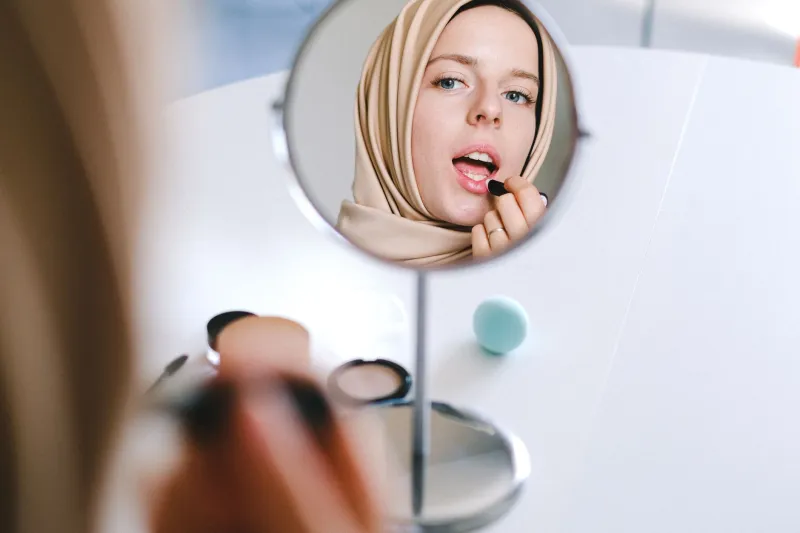
- A healthy relationship with your appearance — one that's neither obsessive nor ashamed
- Intimacy, in marriage, in friendship, in your own private experience of being alive
None of this is trivial. And none of it is required by your faith.
Reclamation Isn't Revolution — It's Return
Here's what reclaiming your body doesn't have to look like: it doesn't have to be loud, or political, or involve changing your practice at all. For some women, reclamation looks like finally learning to say "I'm tired" and meaning it. For others, it's finding a form of movement that feels joyful rather than punishing. For others still, it's working through the shame narratives in therapy until they start to lose their grip.
Reclamation is deeply personal, and it's not a single moment — it's a practice.
Some starting points that have resonated with Muslim women navigating this:
Body-based mindfulness. Not in a commodified wellness-app way, but in the simple practice of checking in with your physical self during prayer, during rest, during daily life. What do you actually feel right now? Where is tension living in your body? This kind of attention is not vanity. It's presence.
Separating cultural baggage from religious teaching. This takes work, often with a knowledgeable scholar or a therapist who understands both faith and psychology. But it's worth asking: where did this specific belief about my body come from? Is it Quran? Is it hadith? Is it my grandmother's village? The answers matter.
Finding community that reflects your full humanity. There are Muslim women's spaces — online and in cities across the US — where the conversation about bodies is nuanced, respectful, and real. Seek them out. The isolation of feeling like your experience is unspeakable is part of what keeps shame in place.
Your Body Is Not the Problem
The Islamic tradition, at its core, celebrates the human being as a creation of extraordinary worth. Laqad khalaqnal insaana fi ahsani taqweem — We have certainly created the human in the best of forms. That verse isn't just about spiritual potential. It's about the physical reality of you.
Your body is not a liability. It is not primarily a source of temptation for others. It is not something to be hidden from yourself in the name of humility. It is the vehicle through which you experience this life, worship, love, create, and connect.
You deserve to feel at home in it. That's not un-Islamic. That might actually be the point.