Joy Is a Radical Act: How Muslim Women Are Claiming Happiness in Spaces That Weren't Made for Them
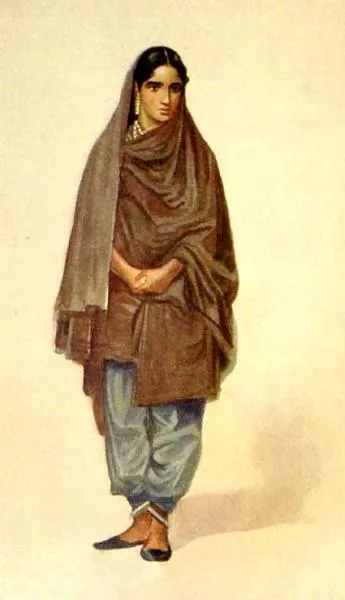
Photo: M. V. Dhurandhar, Public domain, via Wikimedia Commons
Let's be honest about something: a lot of American spaces were not built with Muslim women in mind. The office happy hour centered around an open bar. The college sorority culture that assumes a particular kind of weekend. The gym locker room that offers zero accommodations for modesty. The workplace holiday party where someone always asks if you're "allowed" to have fun.
These aren't dramatic examples. They're Tuesday. They're the background hum of navigating daily American life as a visibly Muslim woman — a constant, low-grade friction that nobody else in the room seems to notice because, for them, the room already fits.
And yet.
Muslim women are choosing joy anyway. Not as a performance of resilience, not as proof that they're "fine," but as a genuine, deliberate, sometimes defiant act of claiming their right to be fully alive in spaces that weren't designed for them.
That's what we want to talk about.
The Exhaustion of Constant Navigation
Before we get to the joy part, let's name the real thing: it is tiring to constantly calculate your presence. To assess, before you walk into a room, whether your hijab will become the topic. Whether someone will ask where you're "really" from. Whether the lunch menu has anything you can actually eat. Whether you'll spend the afternoon deflecting questions instead of doing your actual job.
This is not paranoia. It's pattern recognition built from experience. And carrying that cognitive load — the constant social math of being visibly different in predominantly non-Muslim spaces — takes energy that other people get to spend elsewhere.
Acknowledging that exhaustion isn't wallowing. It's the foundation of understanding why choosing joy, in spite of it, is such a meaningful act.
What Reclaiming Joy Actually Looks Like
It doesn't look like one thing. That's important. Reclaiming joy isn't a single grand gesture — it's a collection of small, intentional choices that add up to something significant.
It looks like Yasmin, a 25-year-old marketing coordinator in Chicago, who started bringing her own sparkling water to work happy hours and decided she was going to have just as much fun as everyone else — maybe more, because she actually remembered the night afterward. "I used to skip those things entirely," she says. "Then I realized I was punishing myself for their awkwardness. Now I show up, I'm loud, I'm funny, I connect with people. The discomfort is theirs to manage, not mine."
It looks like Rania, 30, a nurse in Dallas, who started a lunch group at her hospital specifically for Muslim colleagues — not as a formal ERG, just as a standing invitation to eat together, speak Arabic when they want to, and decompress without translating themselves. "We call it the real break room," she laughs. "We go back to work with so much more energy."
It looks like Zahra, 22, a junior at a large state university in Michigan, who joined the campus improv comedy group — the only hijabi in the room — and just kept showing up until the room reshaped itself around her presence. "Comedy is mine," she says simply. "No one gets to make me feel like I don't belong in it."
The Permission Problem
One of the subtler barriers to joy for Muslim women is an internal one: the belief, absorbed from a thousand small messages, that happiness in certain spaces requires a kind of permission. Permission from institutions that haven't offered it. Permission from families who worry. Permission from a broader culture that has very specific ideas about what Muslim women are supposed to want and feel.
Islam itself, it's worth saying, has never asked women to be joyless. The Prophet Muhammad (peace be upon him) laughed. He played with his grandchildren. He encouraged lightness and celebration within the bounds of faith. The idea that piety requires a kind of permanent seriousness is a cultural import, not a religious requirement.
Joy, pleasure, laughter, delight — these are not un-Islamic. They are, in many traditions, understood as expressions of gratitude for the gift of life. Choosing happiness is not a betrayal of faith. For many women, it's an expression of it.
Making Yourself at Home When You Weren't Invited
There's a particular kind of courage in making yourself comfortable in a space that didn't plan for you. It's not aggressive. It's not loud. It's just — present. Unashamed. Settled.
Muslim women are doing this constantly, in ways that often go unnoticed but quietly shift the culture of every room they enter. The woman who hangs her own art in her office cubicle. The one who plays her playlist in the shared kitchen and doesn't apologize for the Arabic lyrics. The one who brings her homemade baklava to the potluck and gives exactly no explanation about what it is — just "it's good, try it."
These are small acts. They are also the architecture of belonging, built piece by piece in spaces that started out indifferent or unwelcoming.
Finding Your People, Wherever You Are
Joy is easier to sustain in community. One of the most consistent things Muslim women describe when they talk about thriving in non-Muslim-majority spaces is finding their people — not necessarily other Muslim women, though that matters too, but people who see them fully and delight in their presence.
Those relationships don't always come quickly. Sometimes you have to build them deliberately, showing up consistently until someone decides to actually know you rather than their idea of you. But they exist. And when they're real, they change everything.
"I have a work best friend who is a middle-aged white woman from Wisconsin," says Nour, 28, a data analyst in Seattle. "She doesn't understand everything about my life. But she defends me in rooms I'm not in, and she makes me laugh harder than almost anyone I know. That friendship is one of the best things in my life right now."
The Radical Ordinary
Here's the thing about joy as a radical act: the goal is for it to eventually become ordinary. For Muslim women to inhabit American spaces so fully and for so long that their presence stops being a statement and starts being just — a fact. A given. Unremarkable in the best possible way.
We're not there yet. But every Muslim woman who walks into a room and decides to be fully herself — funny, warm, opinionated, joyful — moves the needle. Not because she's performing anything. Because she's simply refusing to be less than she is.
And that refusal, repeated daily, in offices and classrooms and gyms and coffee shops across the country, adds up to something real.
Show up. Take up space. Laugh loudly. Bring the baklava.
Your joy belongs here too.