When Staying Becomes Self-Betrayal: The Quiet Pressure Keeping Muslim Women in the Wrong Relationships
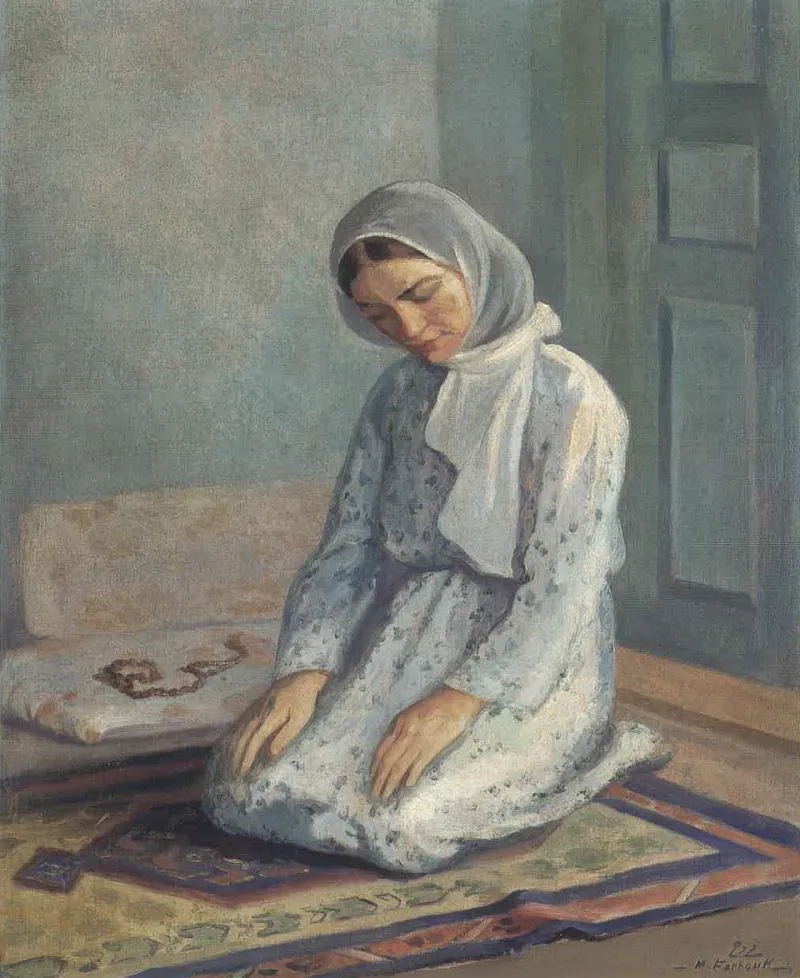
Photo: Moustafa Farroukh, Public domain, via Wikimedia Commons
There's a particular kind of exhaustion that doesn't show up in your face. It lives somewhere deeper — in the way you rehearse conversations before you have them, in the way you shrink your needs down to something more manageable, in the way you've convinced yourself that this is just what love looks like. For a lot of Muslim women in the US, that exhaustion has a name. It's called loyalty. And we've been taught to wear it like a badge of honor.
But somewhere between the genuine beauty of commitment and the cultural machinery that enforces it at all costs, something gets lost. And that something is usually you.
The Messaging We Absorbed Without Realizing It
From the time we were old enough to understand what marriage meant, most of us were absorbing a very specific story. A good woman is patient. A good woman makes it work. A good woman doesn't air her problems, doesn't walk away, doesn't choose herself over her family's reputation. These ideas weren't always spoken out loud — sometimes they lived in the way aunties talked about divorced women at dinner, or in the Friday khutbahs that praised wives for their endurance, or in the quiet shame that followed any woman who dared to say enough.
Religion got pulled into it, too. Verses about patience (sabr) and the sanctity of marriage were applied selectively and often without context, leaving many women with the impression that leaving a difficult relationship was somehow a failure of faith. That God wanted them to stay and suffer quietly. That their reward was somewhere on the other side of pain.
This is not Islam. This is a cultural distortion of Islam — and the difference matters enormously.
Community Shame Is a Weapon, Not a Compass
Let's be honest about what "what will people say" actually does. It doesn't protect you. It protects everyone else's comfort. When we stay in relationships that diminish us because we're afraid of community judgment, we're essentially outsourcing our wellbeing to people who will move on to the next piece of gossip by next Friday.
The shame machine is particularly powerful in tight-knit Muslim communities across the US, where everyone knows everyone, where your family's reputation feels intertwined with your choices, and where being a divorced or separated woman can still carry a social penalty that feels wildly out of proportion. Women have described feeling more afraid of the mosque parking lot conversation than of the actual relationship they were in. That's not a spiritual community functioning as it should. That's a social hierarchy maintaining itself at the expense of its most vulnerable members.
Recognizing this doesn't mean abandoning community. It means refusing to let community be the final word on your life.
What Self-Abandonment Actually Looks Like
It rarely announces itself. It doesn't usually look like a dramatic moment of surrender. It looks like:
- Editing yourself constantly to avoid conflict
- Feeling responsible for someone else's emotional regulation
- Telling yourself you're "working on it" for years without anything actually changing
- Losing track of what you even want anymore
- Praying for patience when what you really need is permission to leave
Self-abandonment in relationships often gets framed as selflessness, especially for Muslim women who've been taught that prioritizing their own needs is somehow un-Islamic. But there's a meaningful difference between genuine generosity and the kind of self-erasure that happens when you've been told your feelings are less important than the institution you're trying to preserve.
Islam actually has a lot to say about self-worth. The Prophet Muhammad (PBUH) emphasized treating women with dignity and kindness — not as sacrificial figures in someone else's story.
The Question Nobody Asks
We spend a lot of time asking Muslim women whether they've tried hard enough, prayed enough, been patient enough. We rarely ask: Is this relationship making you more yourself, or less?
That question isn't selfish. It's essential. Relationships — whether romantic partnerships, friendships, or family dynamics — should be places where your identity expands, not contracts. Where your voice gets clearer, not quieter. Where your faith is supported, not weaponized against you.
If the answer is that you've been slowly disappearing inside a relationship that everyone around you calls a blessing, that's information worth sitting with.
A Framework for Knowing the Difference
Not every hard relationship is a harmful one. Difficulty isn't the same as damage. Here's a rough way to tell them apart:
Hard but healthy: You're both growing. Conflict leads somewhere. You feel seen even when you disagree. Your core sense of self is intact.
Hard and harmful: You're shrinking. Conflict is circular or punishing. Your feelings are consistently dismissed or weaponized. You've stopped recognizing yourself.
If you're in the second category, staying isn't strength. It's survival mode dressed up as virtue.
Reclaiming the Narrative
Leaving — whether it's a marriage, a friendship, or a family dynamic — doesn't make you a bad Muslim. It doesn't mean you failed. It doesn't mean you didn't try. Sometimes it means you finally tried for yourself.
The women in our communities who have walked away from relationships that were dimming them are not cautionary tales. They're proof that choosing yourself is survivable. That community gossip fades. That rebuilding is real. That God is not in the business of requiring your self-destruction as proof of devotion.
You are allowed to want more. You are allowed to expect kindness. You are allowed to define loyalty as something that includes loyalty to yourself.
That's not a betrayal of your faith. In many ways, it might be the most faithful thing you ever do.