My Life Is Not a Waiting Room: Muslim Women on Living Fully, Fiercely, and Single
Rana booked her solo trip to Morocco on a Tuesday afternoon, between a work call and a dentist appointment.
She'd been thinking about it for two years. Waiting, she admits, for the right time. For circumstances to align. For — and she says this now with a kind of fond exasperation toward her former self — a husband to go with.
"I kept imagining doing it together with someone," says the 33-year-old teacher from Detroit. "And then one day I thought, what if that person never comes? Do I just never go? Do I just never live?"
She went. Alone. It was, she says, one of the best weeks of her life.
Rana's story isn't unique. Across the US, Muslim women are quietly — and sometimes not so quietly — dismantling a narrative that has followed them since adolescence: that singlehood is a temporary condition, a problem to be solved, a life deferred until marriage transforms it into something real.
They're not buying it anymore.
The Weight of the Question
If you're a Muslim woman past a certain age and unmarried, you know the question. It comes at Eid gatherings and family dinners and in the comments section of your cousin's wedding photos. It comes from aunties who mean well and aunties who definitely don't. It comes in a hundred different forms, but it always means the same thing: when are you going to be complete?
The cultural pressure around marriage in many Muslim communities is real and it's heavy, and it doesn't discriminate much between women who actively want to get married and women who are still figuring out what they want. The message is the same: your singleness is a gap, a problem, a source of collective anxiety that somehow becomes everyone's business.
"I've had family members pray over me at gatherings," says Leila, a 36-year-old attorney in New Jersey. "Like I'm sick. Like my life is a tragedy that needs divine intervention. And I'm standing there thinking — I just got promoted. I traveled to four countries last year. I have a life I love. What exactly are we praying about?"
The disconnect between how these women experience their own lives and how their communities narrate those lives is striking. And it's creating a kind of quiet revolution.
Building a Life That Doesn't Wait
What does it actually look like to build a full life outside of marriage? For the women doing it, it looks a lot like just... living.
It looks like Noor, a 30-year-old entrepreneur in Chicago, who used money she'd been mentally earmarking for a future home with a future husband to instead launch a modest fashion business that now employs three people. "I realized I was saving for a life I didn't have instead of investing in the life I do have," she says. "Once I stopped doing that, everything shifted."
It looks like Yasmine, a 38-year-old physician in Los Angeles, who bought her own condo at 35 after years of hesitation. "People kept saying things like, 'what if you meet someone and he has a house?' And I thought — what if I meet someone and I have a house? Why is that a problem? Why am I the one who's supposed to stay in limbo?"
It looks like intentional community-building — dinners hosted for other single Muslim women, travel groups, book clubs, WhatsApp threads that are equal parts deen and debauchery (the halal kind). Because one of the things that often goes unsaid is that marriage isn't just about romantic partnership. It's about having someone. And Muslim women who aren't married are figuring out, with increasing creativity and intention, how to build that sense of belonging anyway.
Faith, Singleness, and the Theology Nobody Taught You
Here's something worth sitting with: Islam does not actually teach that an unmarried life is a lesser life.
The Prophet Muhammad (PBUH) encouraged marriage, yes — but Islamic scholarship also has a long tradition of recognizing that marriage is not the only path to spiritual fulfillment, purpose, or closeness to Allah. Many of the most revered figures in Islamic history were scholars, mystics, and servants of their communities whose legacies had nothing to do with their marital status.
The urgency around Muslim women marrying young and quickly is, in large part, cultural — rooted in specific regional traditions and social structures that traveled to the US with immigrant communities and calcified over generations. It is not, despite how it's often presented, a straightforward religious mandate.
"That was genuinely liberating to understand," says Zara, a 31-year-old graduate student in Boston who has been studying Islamic theology. "When I started actually reading and not just absorbing what I'd been told, I found a faith tradition that was way more spacious than I'd been led to believe. My relationship with Allah is not contingent on my relationship status."
This kind of theological reclamation — going back to the source and finding room that the cultural overlay had covered up — is something a lot of Muslim women describe as transformative.
The Joy Nobody Talks About
Here's the part that gets left out of most conversations about unmarried Muslim women: a lot of them are genuinely happy.
Not performing happiness. Not making peace with a consolation prize. Actually, substantively happy — in their friendships, their work, their faith practices, their freedom to structure their days around their own priorities.
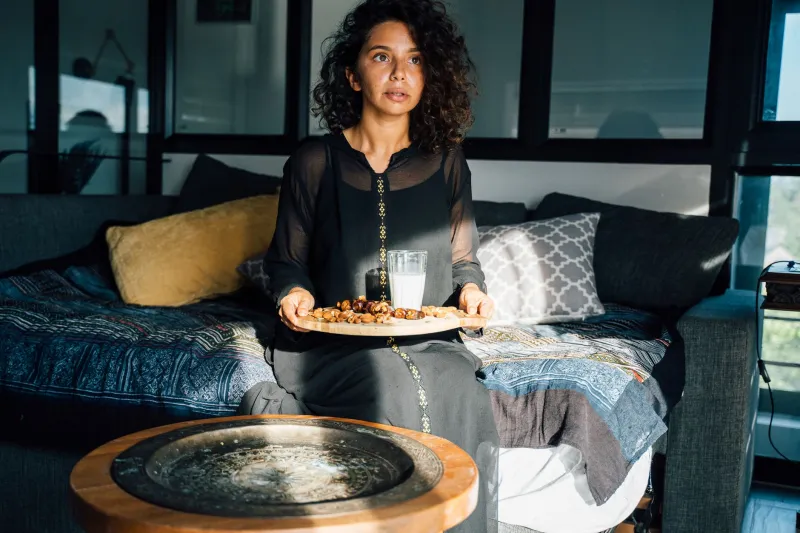
"I sleep diagonally," Leila says, laughing. "I eat dinner at 10pm if I feel like it. I spent last Ramadan doing exactly the spiritual practice I wanted to do, without negotiating it around anyone else's schedule. These are not small things."
Rana, back from Morocco and already planning her next trip, puts it this way: "I used to feel like I was waiting for my life to begin. And now I realize — this is it. This is my life. It's actually really good."
On Hope and Holding Both Things
None of this means that Muslim women who want to get married are doing something wrong. Wanting partnership is beautiful and human and completely compatible with everything described above. The point isn't that marriage is bad. The point is that its absence is not a catastrophe.
You can want something and not let the wanting hollow out the present. You can be open to love and also be completely, unapologetically in love with your life as it is. Those two things can exist at the same time.
"I still make dua for a partner," Zara says. "I believe in marriage. I want that someday. But I also believe Allah put me here right now, in this life, with these gifts and this time and these people around me. To spend all of it waiting would be its own kind of ingratitude."
The waiting room is closed. Muslim women have left the building — and they took everything worth having with them.